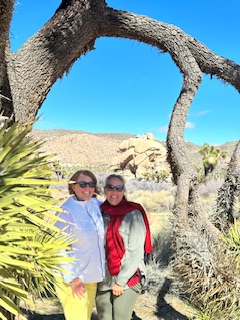
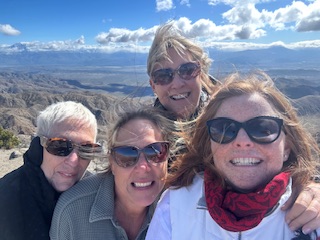
A fabulous day trip to Joshua Tree National Park with good friend Amy D’Aprix and her sister Jean. They were in Palm Springs for a vacation so we made sure we could meet up. What a fun day. Lori and I took an Uber to their villa and then Amy drove us in their rental car to the park, which was about 40 minutes away.
Did you know the Joshua Tree is not actually a tree? Botanists call it Yucca brevifolia, a member of the asparagus family. It is also a succulent. Morman settlers in southern Utah nicknamed it “the Joshua” supposedly because the striking, human-like form was reminiscent of the biblical Joshua reaching up to the sky.
Joshua trees are most commonly found in the Mojave desert. Joshua trees need to undergo a dormant period of cold weather before flowering, but once they flower, they are dependent on one tiny insect for pollination. Yucca moths transfer pollen between flowers to ensure seeds will form. Then they lay their eggs within the pollinated flower. When the larvae hatch, they feed on some of the seeds, while the rest disperse and grow into more Joshua trees.
Because Joshua trees require a cold period to flower, they are vulnerable to climate change. The U.S. Fish and Wildlife Service is currently reviewing the Joshua tree for listing under the endangered species act.
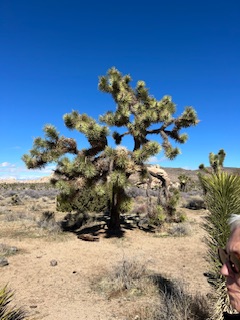
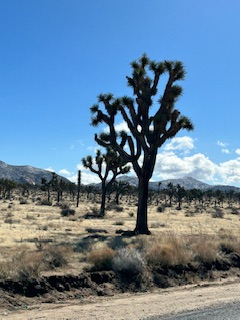
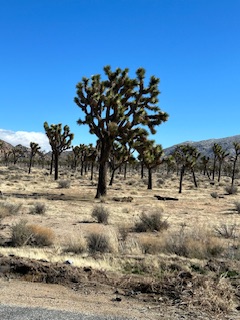
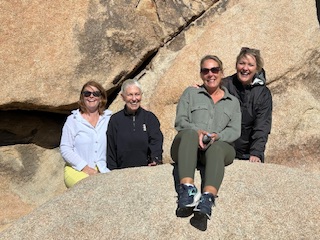
Joshua Tree was designated a National Monument in 1936 by President Franklin D. Roosevelt and accorded National Park status in 1994. Human history stretches back well over 10,000 years. The first group known to inhabit the area was the Pinto Culture, followed by American Indians, including the Serrano, the Chemehuevi, and the Cahuilla. In the 1800s there was mining and cattle driving. In the 1900s homesteaders began filing claims. Everyone left a footprint here and if it wasn’t for Minerva Hoyt, who knows what this place would be like. Minerva Hoyt became a staunch backer of the protection of desert landscapes. Because of her wealth and status she was able to convince authorities that a National Park was the best way to preserve deserts. It was Minerva Hoyt who got the park its National Monument status.
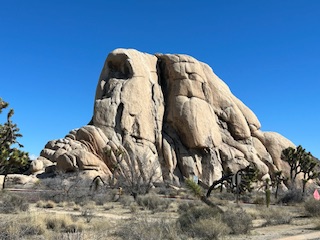
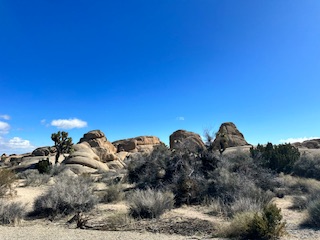
In Joshua Tree Park the topography is outstanding and ever changing. The rock formations are very interesting and the oldest rocks here are 1.4 – 1.7 billion years old. The rocks were formed over 200 million years ago by two tectonic plates. The North American plate collided with the Farallon plate, which sat under the Pacific Ocean. The denser Farallon plate was forced under the North American plate, a geological process called subduction. The jumbles of rock piled about Joshua Tree got their start underground via volcanic machinations. It was the upward pumping of monzogranite, a particular form of molten rock, that eventually gave birth to the landscape that we see today. The pictures below really don’t do the landscape justice.
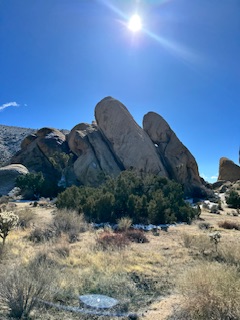
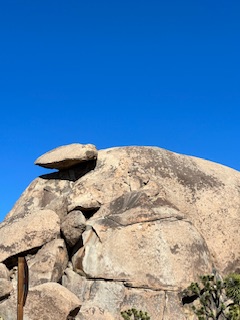
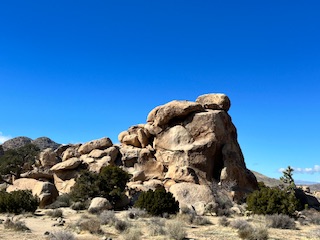
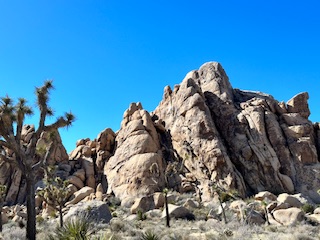
In the Colorado desert, the landscape was quite different and had smaller plants called Teddy-bear cholla, that were beautiful in the sunshine and there were fields of them!
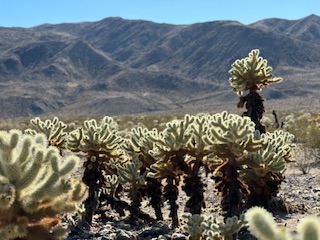
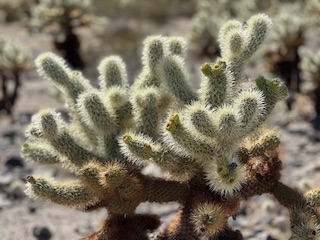
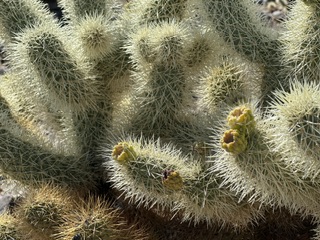
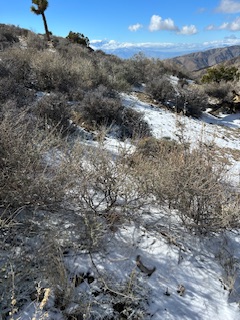
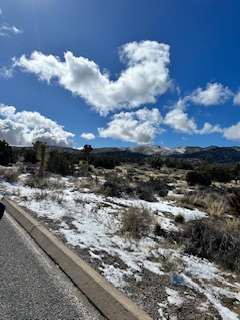
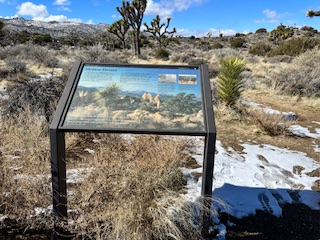
Let’s get back to the cold and snow shall we? Here are some pics. Just so you know we weren’t lying. In fact at the top of the mountain we saw a guy carrying old wooden snowshoes out to the trails.
At the end of our fun and sometimes very cold day we all went out for dinner at a Mexican restaurant, Pueblo Viejo Grill in Indio close to Rancho Casa Blanca RV Park. After dinner Amy and Jean drove us back to the RV park and we did a tour of the grounds. They were both impressed with how big the park was and how much there was to do including golf. We then did a quick tour of our RV and this is when Amy met Safiya and their relationship began!