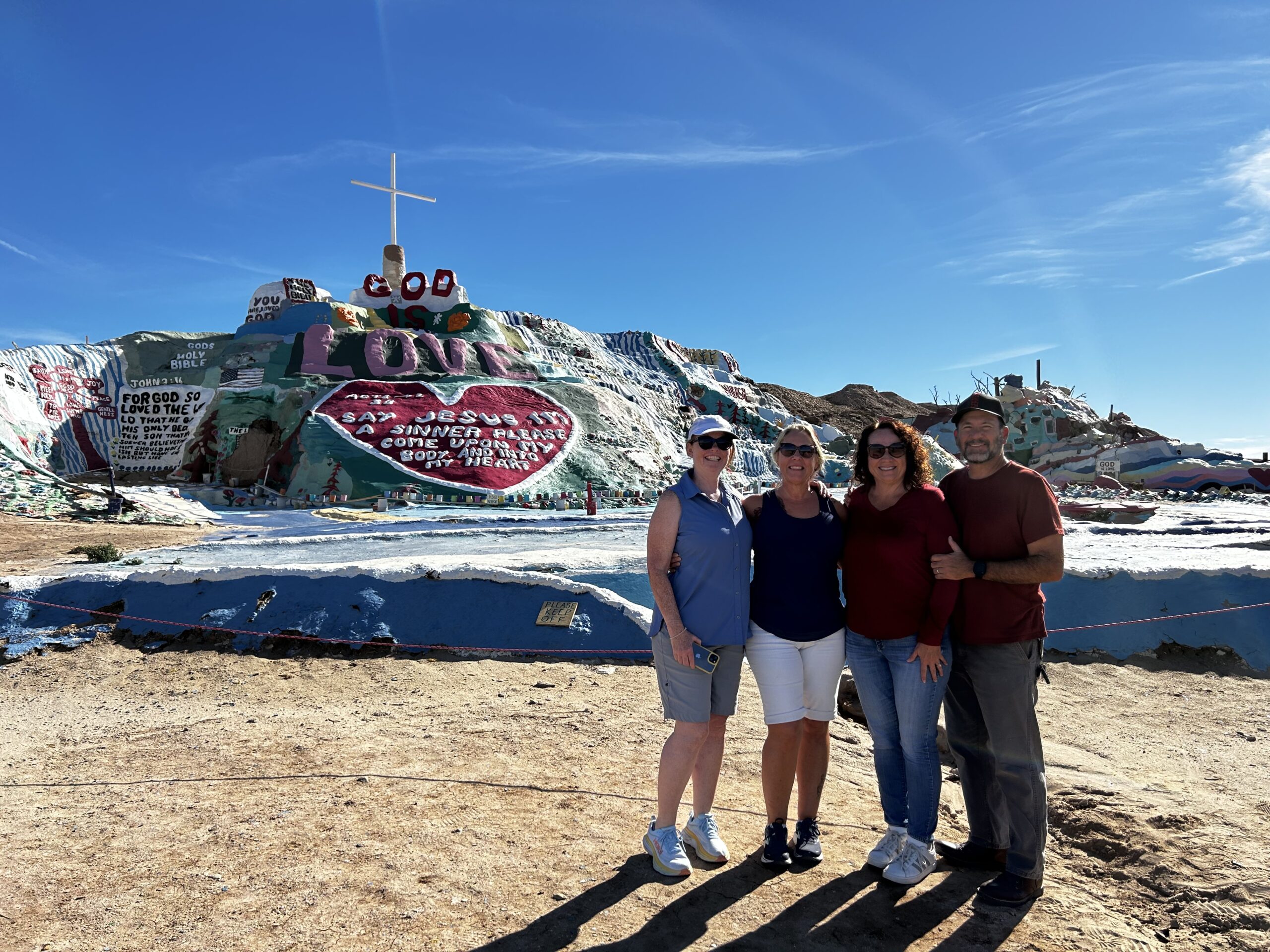
We enjoy the pools multiple times a day here at Fountain of Youth Spa RV park. There are so many friendly people here and some we are getting to know well. Mike is at the pool everyday and talks to everyone! Barb and Mike talked about Salvation Mountain and Slab City, and he shared that they are a must see. Learning that we did not have a car Mike called his wife Linda over into the conversation and within minutes they agreed they would be happy to take us there. They shared they love this famous donut shop that makes the best apple fritters in the world, and we would start the day there for breakfast. And so, it was. Another exciting day trip in the works.
Our first morning stop was Donut Avenue in Imperial, California for apple fritters and coffee. And, YES we would vote them as some of the best we have ever tasted. With content bellies, and an important washroom visit, we were ready to tackle the day ahead without facilities.
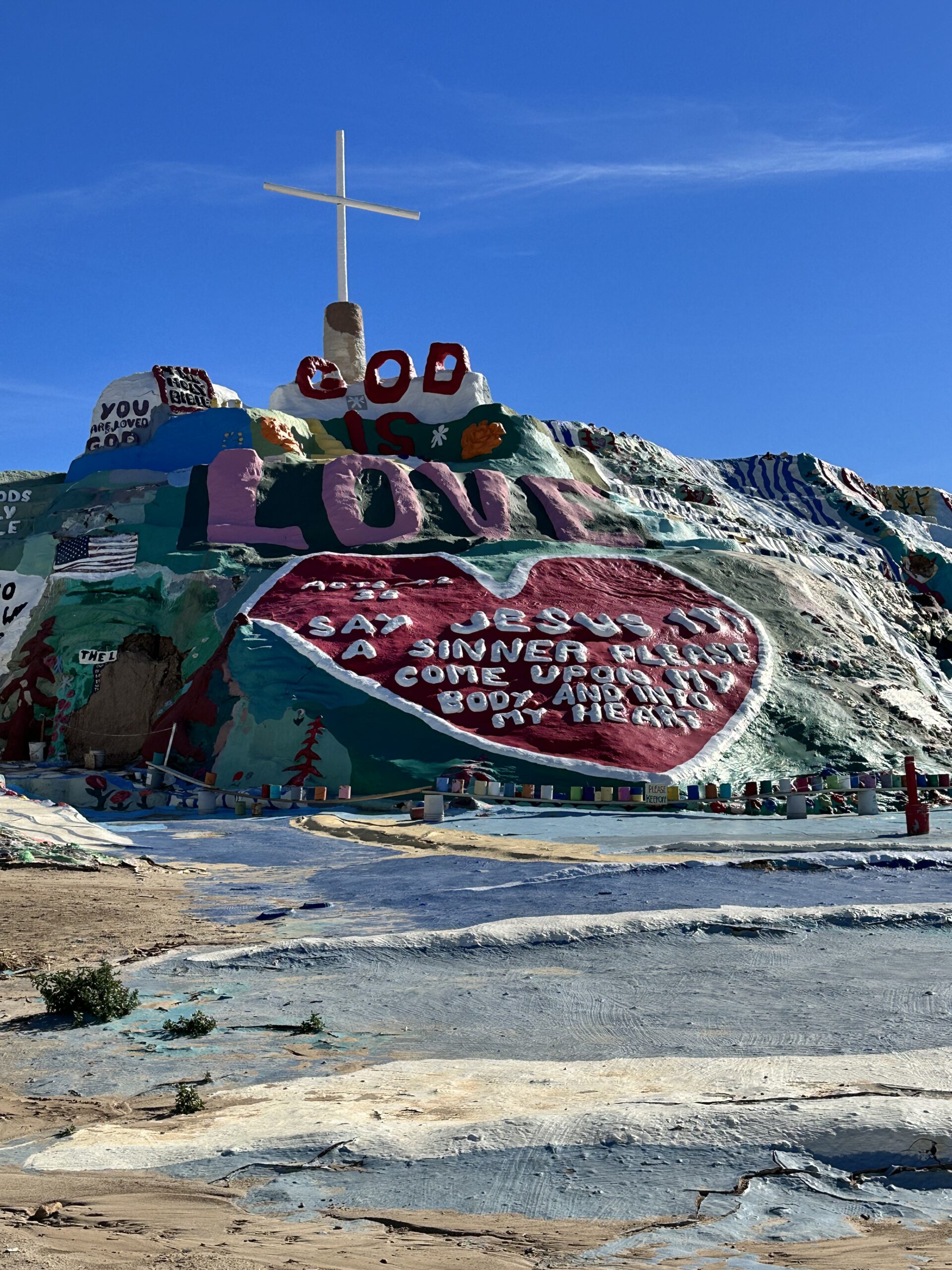
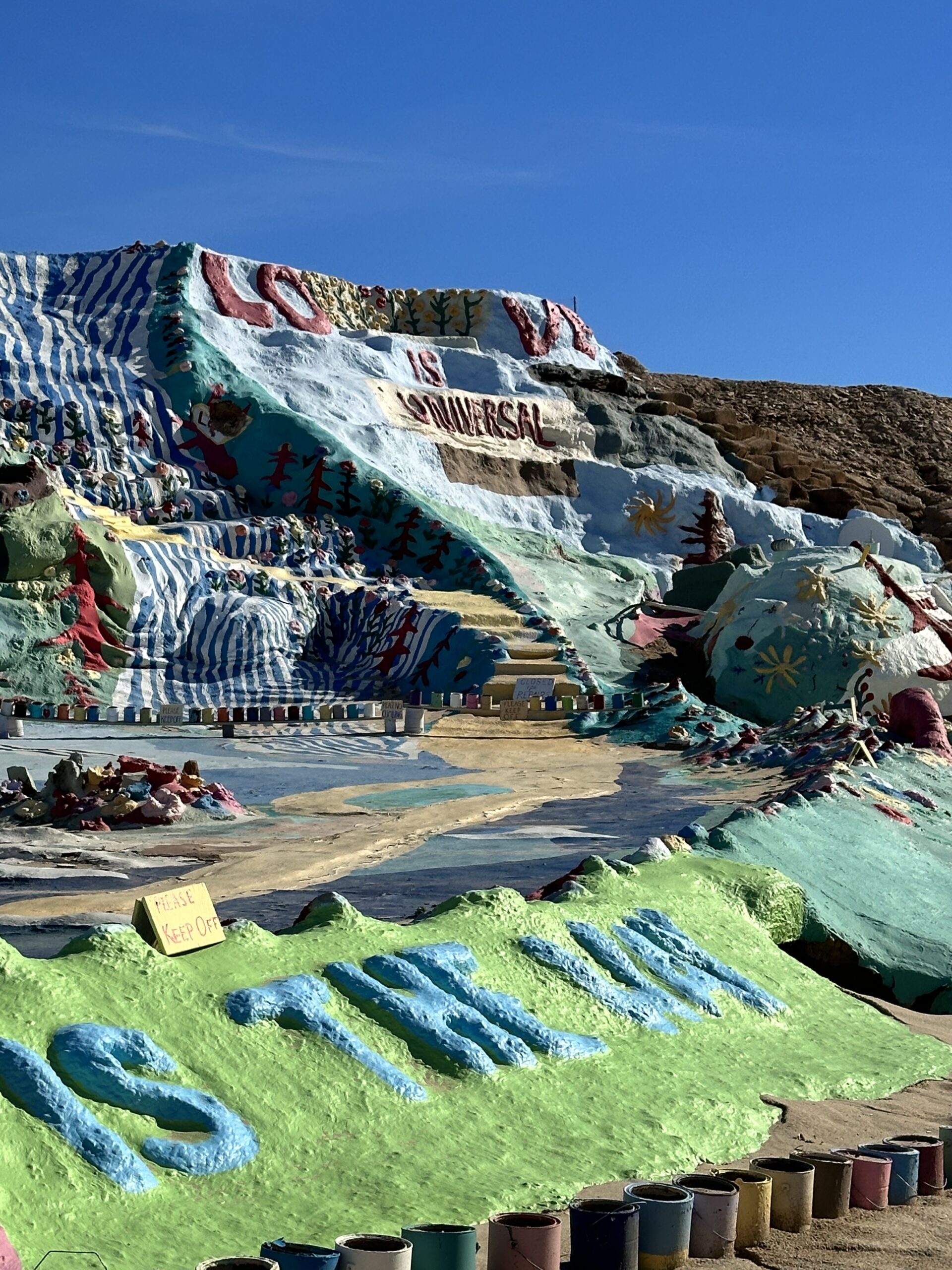
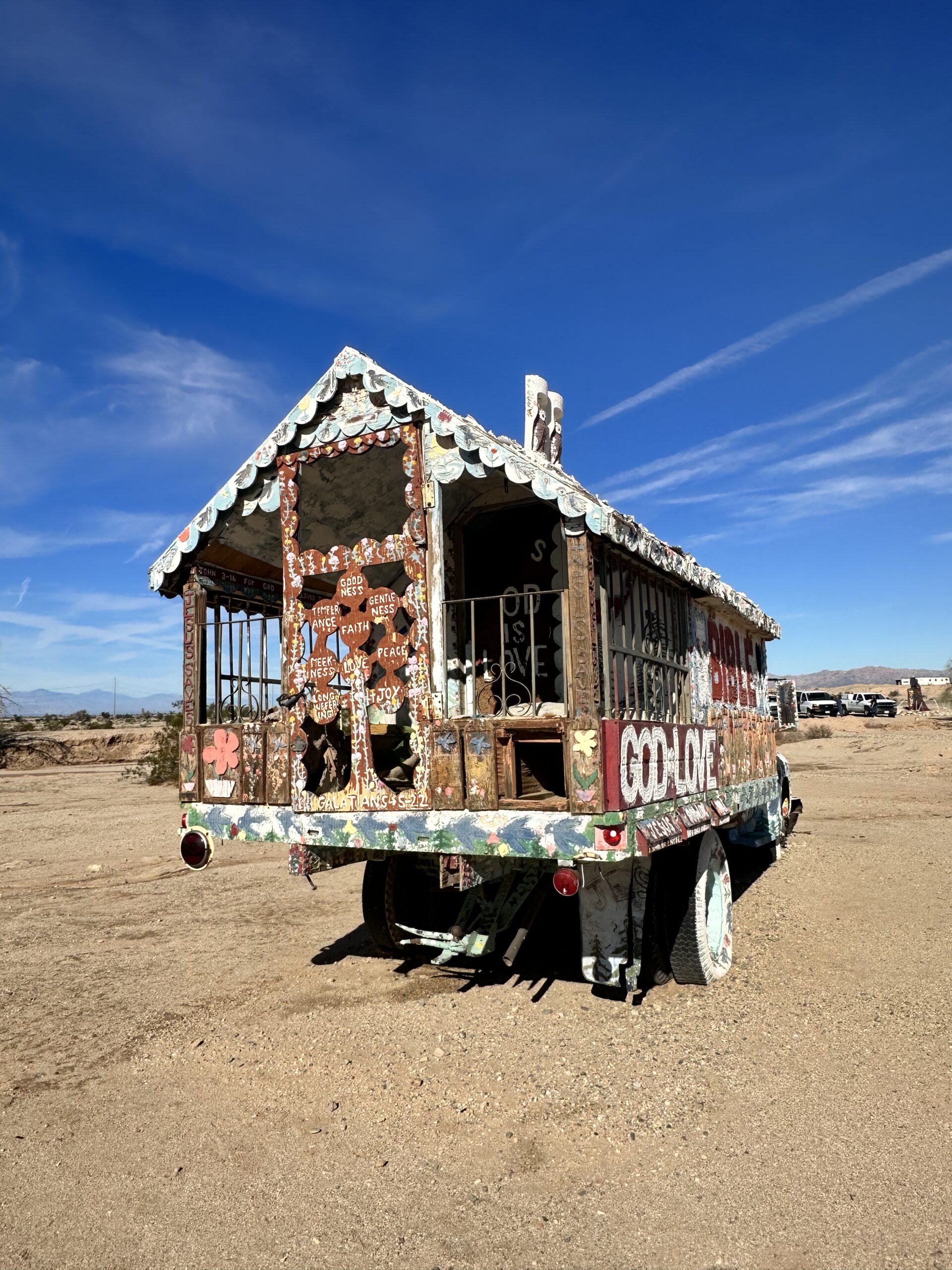
The Story of Salvation Mountain is quite unique. Leonard Knight was an artist born in Burlington Vermont in 1931. He was drafted into the army at age 20. Fortunately, the Korean war ended 10 days after he arrived in Korea. So, he returned to Vermont and went to work painting cars at an auto body dealership.
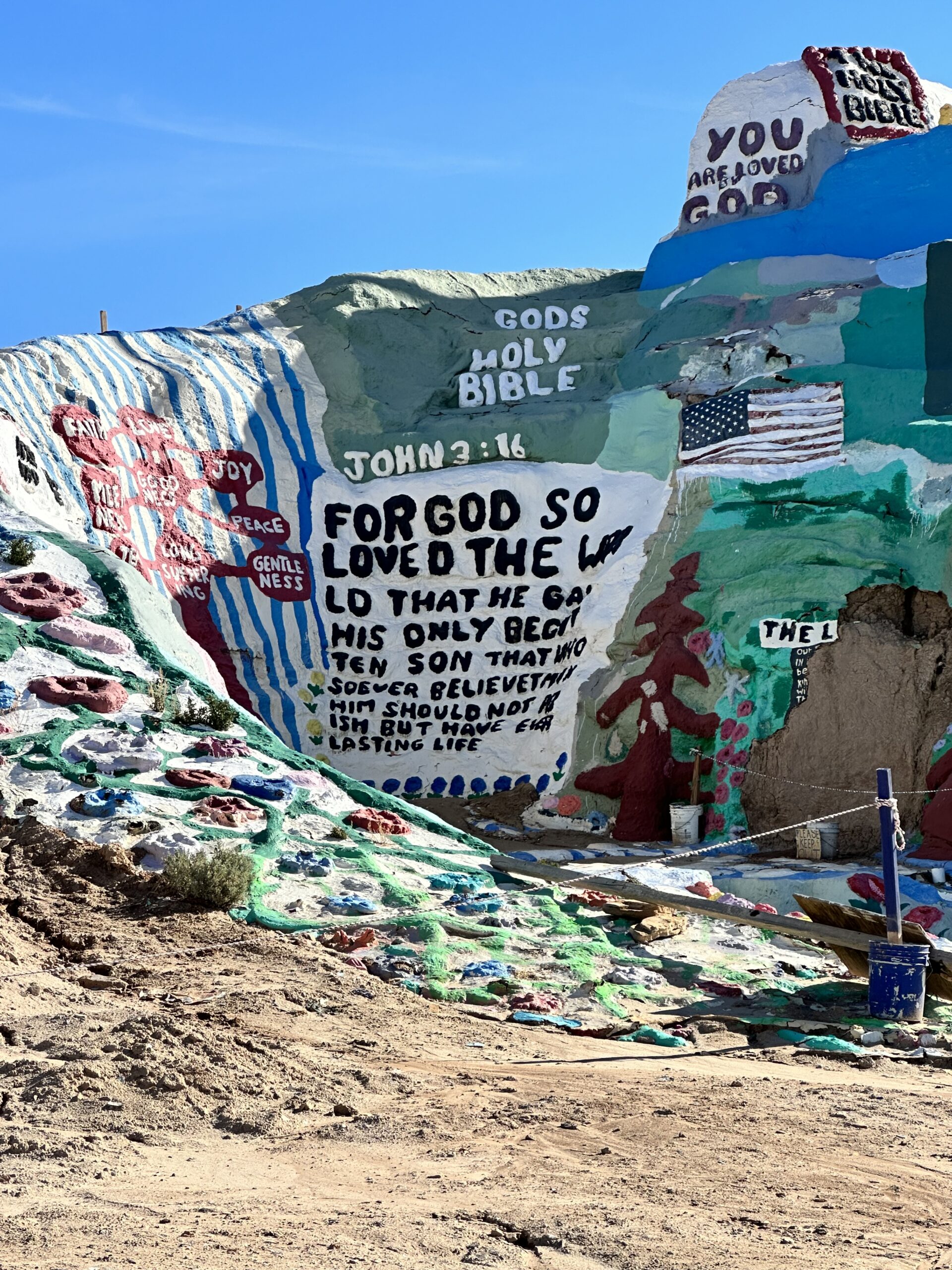
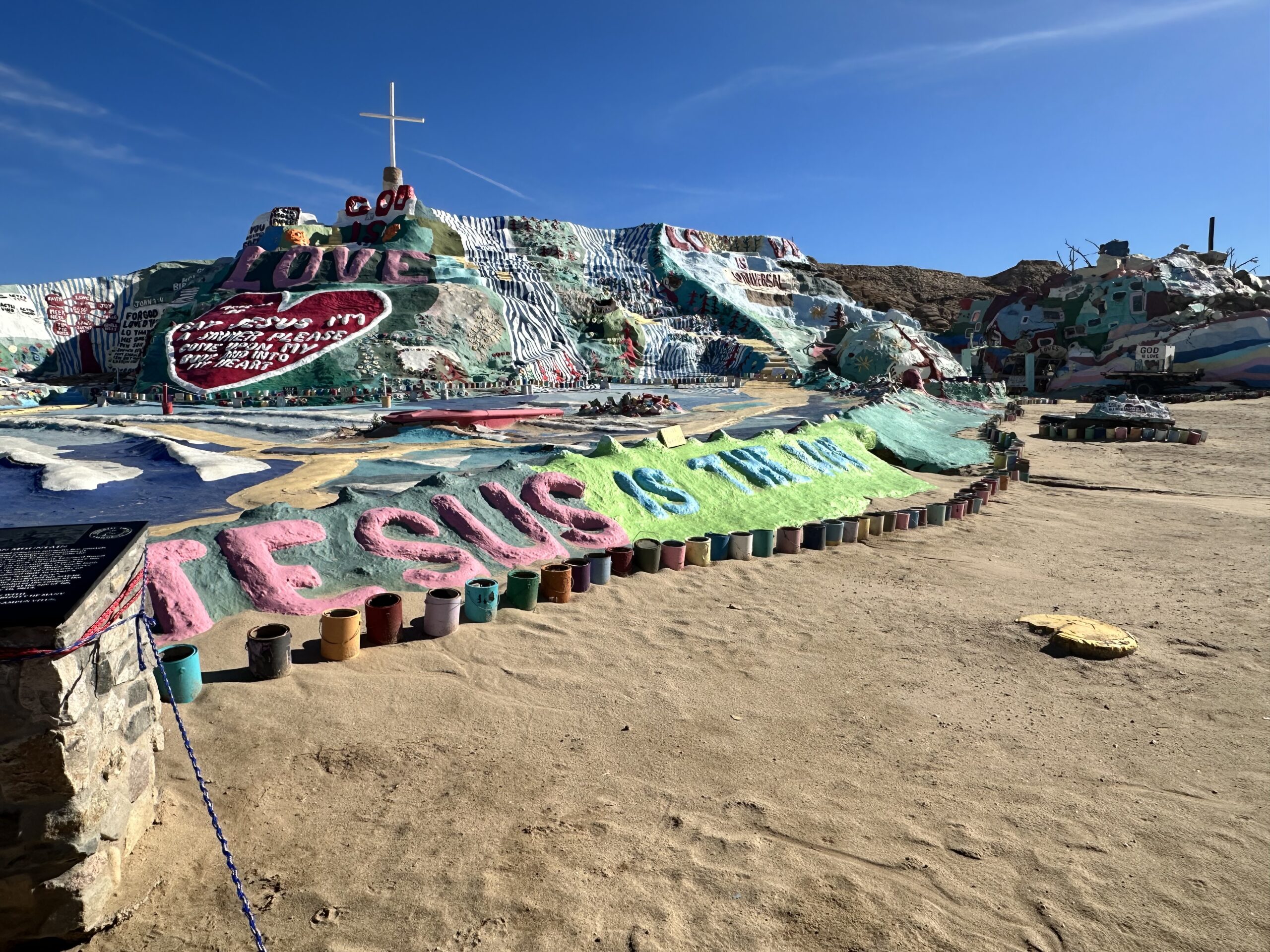
After finding faith in the 1970’s he began the creation of a hot air balloon to share Jesus’s messages. While the balloon never took flight, he evolved his plan and decided to share God’s love via the 28-year creation of Salvation Mountain in the Sonoran Desert. He did so by building, and rebuilding after storms, this incredible mountain from hay bails and other finds and then set about painting it. Much of the paint he found in the trash and over time as word got out people began visiting and donating leftover paint.
While some call his work divine inspiration, others call it just art and others refer to it a lot more cynically. Interestingly, his dream of sharing God’s love did materialize as people come from all over the world to see the mountain.
In 2011 Leonard was placed in a long-term care facility in El Cajon for dementia. In 2014 he passed away. His work lives on however, as a small group of volunteers decided to maintain it in his memory. They organize shifts to keep watch and they contribute their labour to paint. When we were there we learned of the paint donations, and not having any with us, we donated money in the conveniently set up donation box at the foot of the hill.
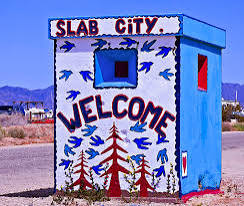
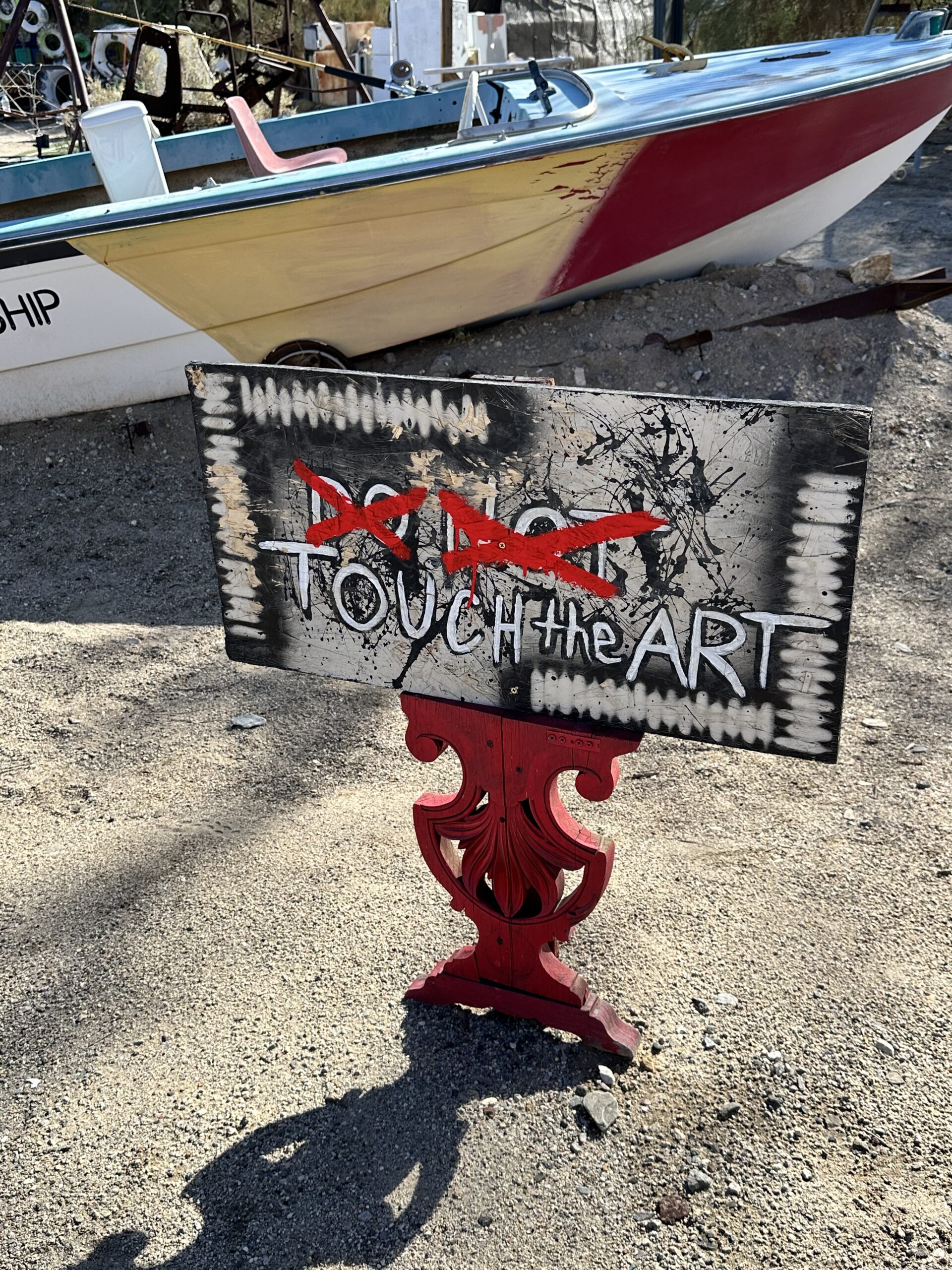
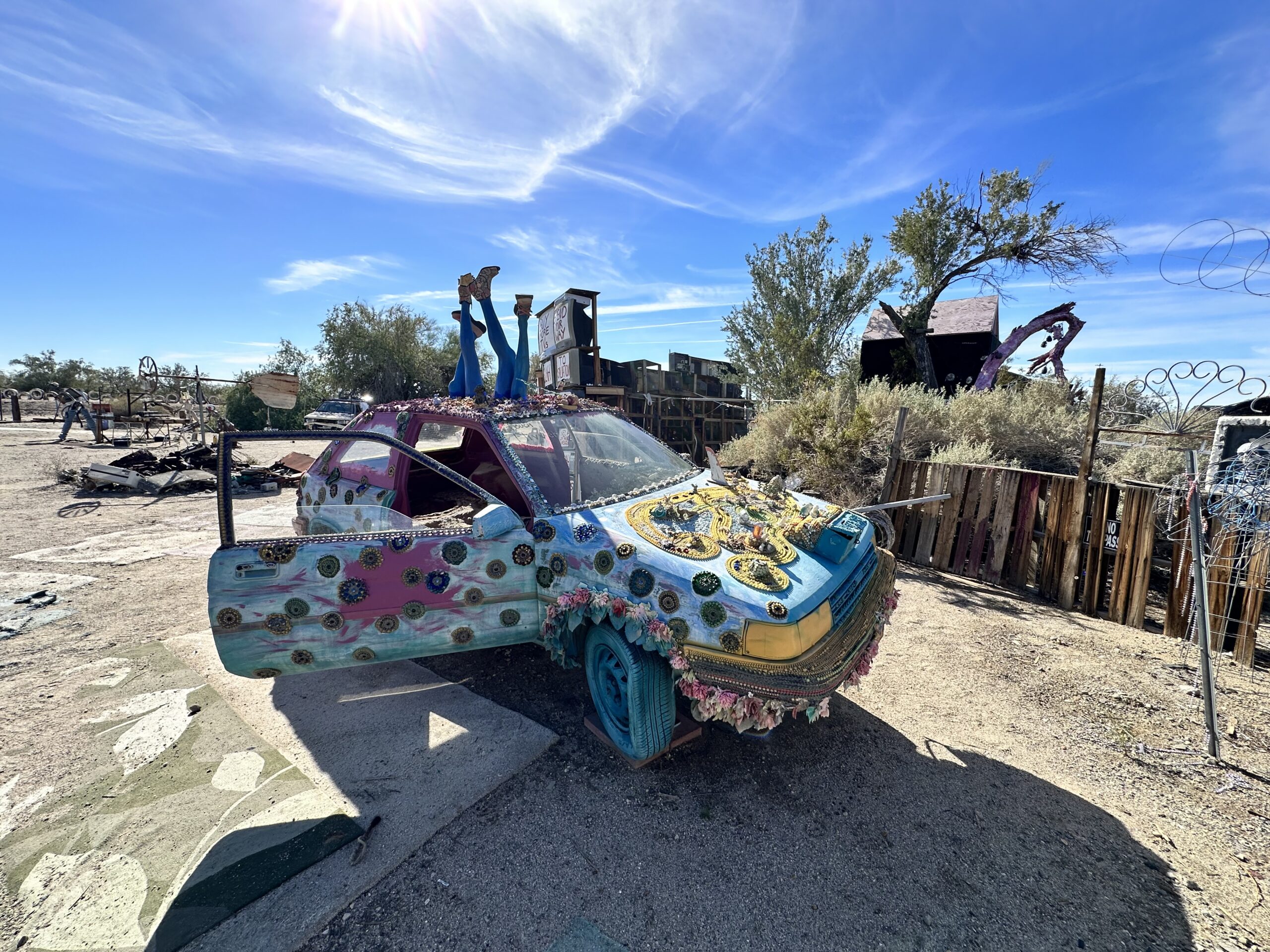
We count it a blessing that friends from the RV park offered to take us here. Truly an interesting landmark at the entrance to Slab City, California. Now even more interesting is Slab City itself.
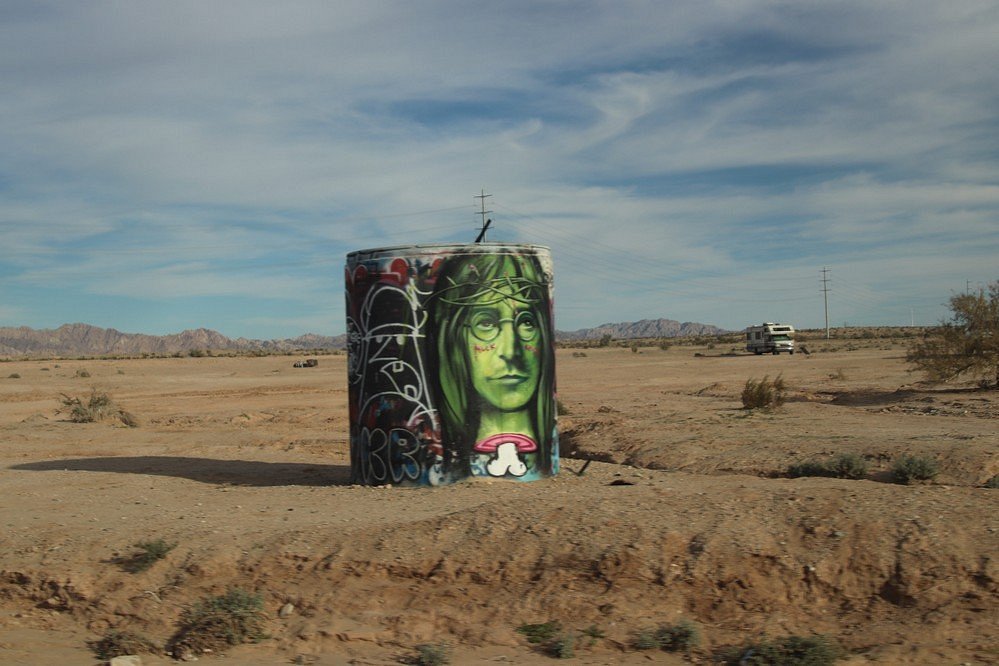
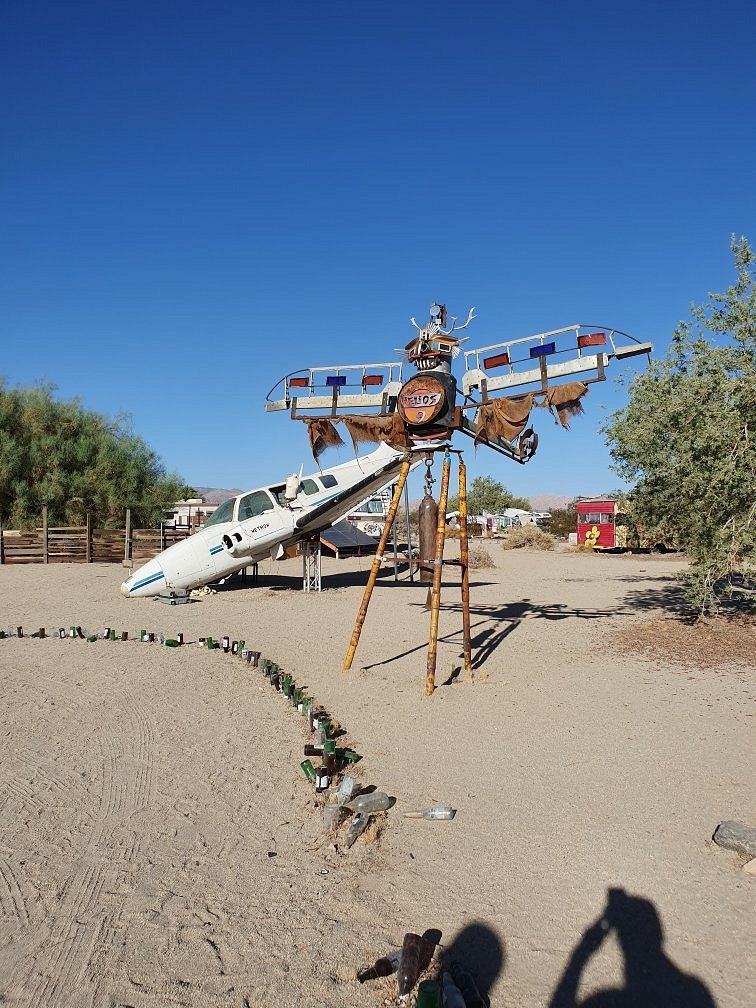
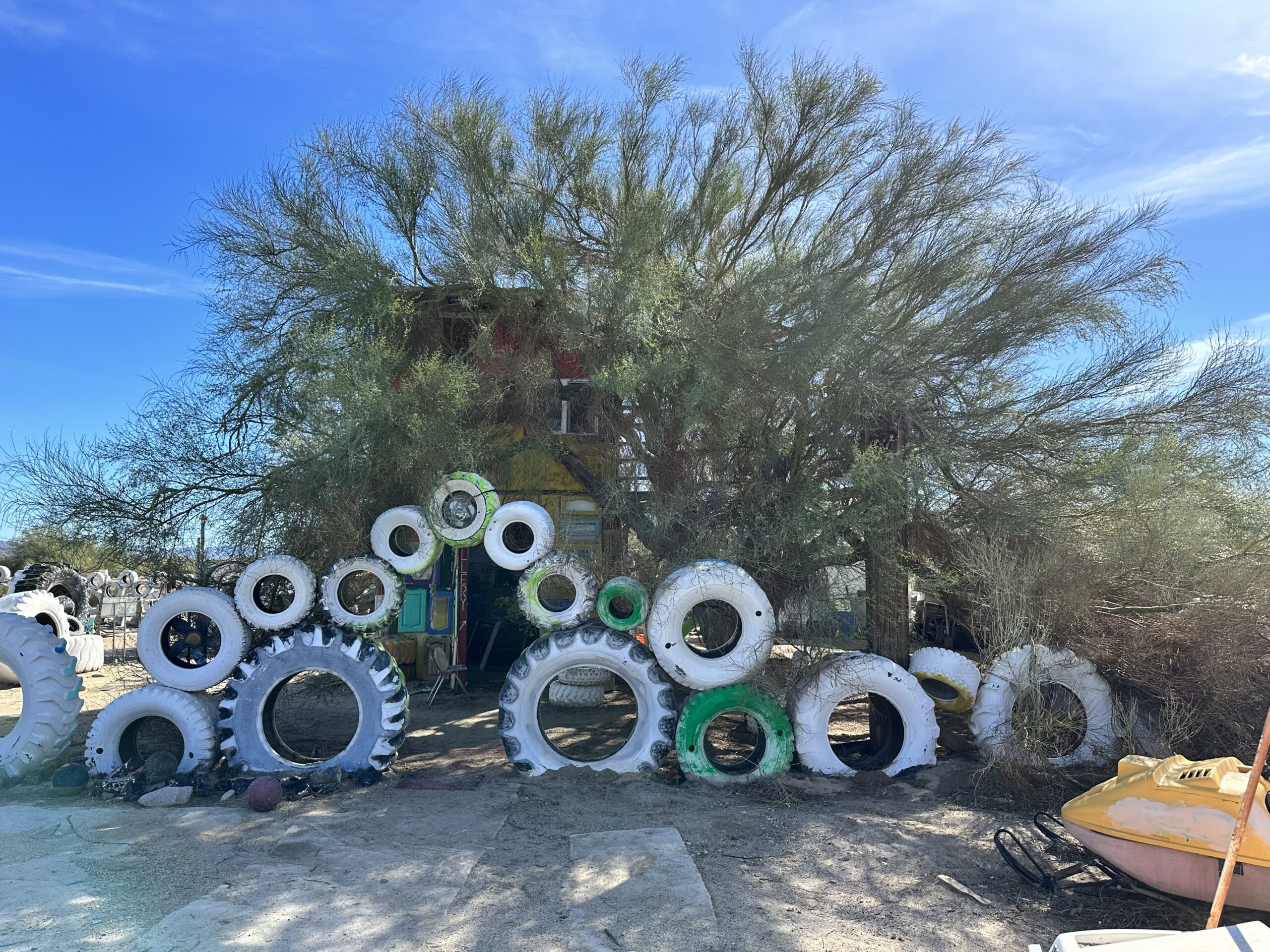
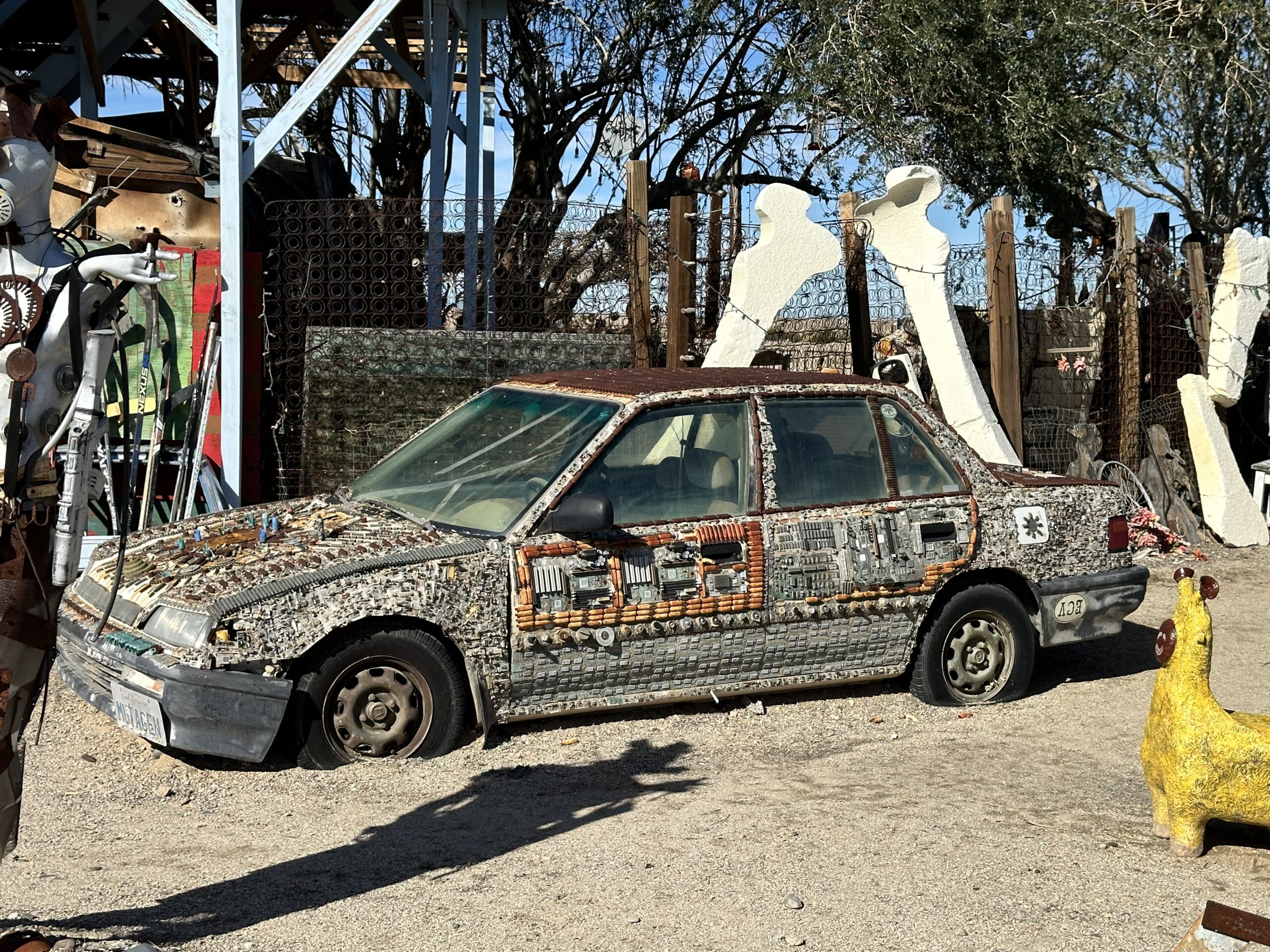
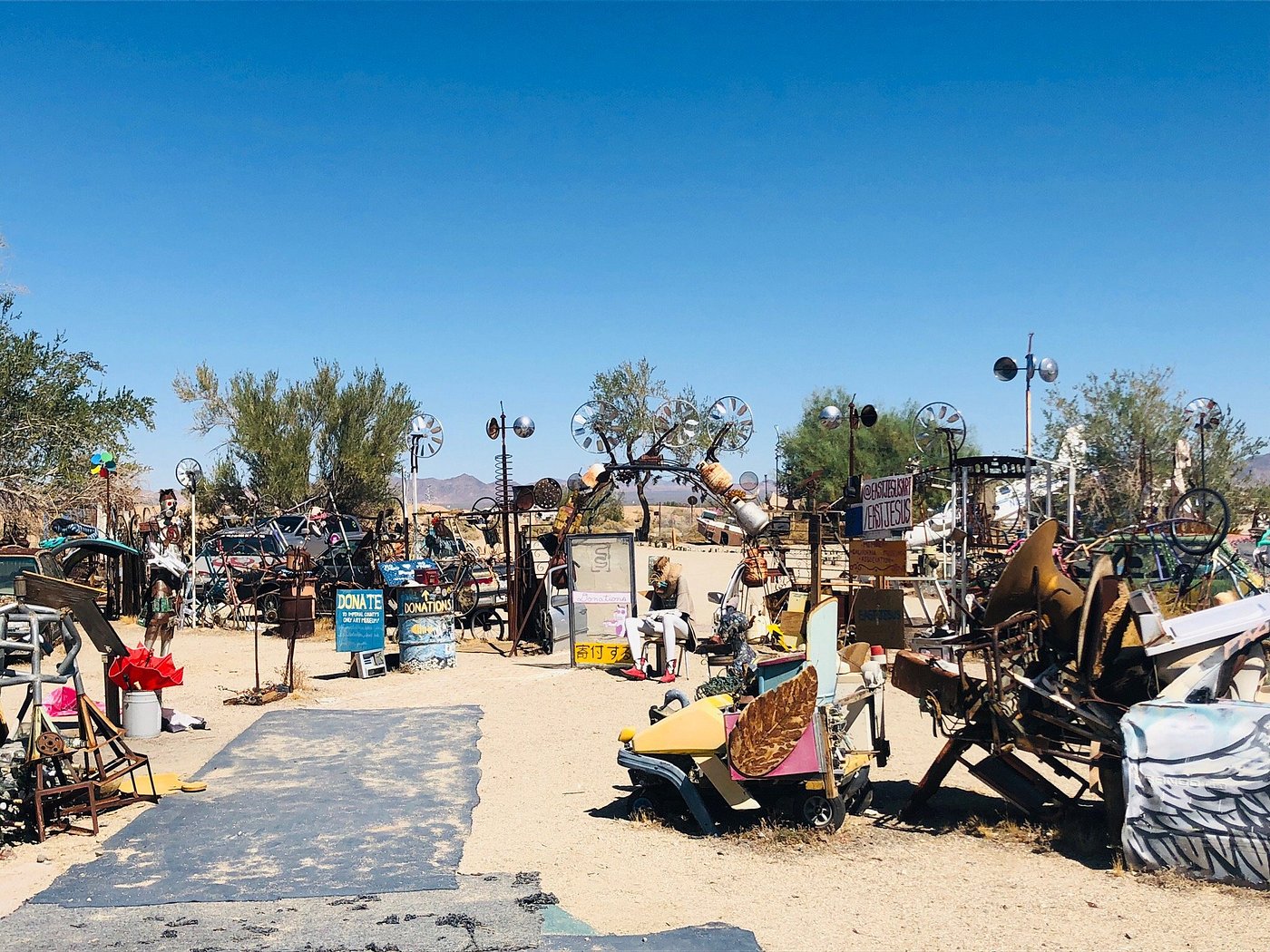
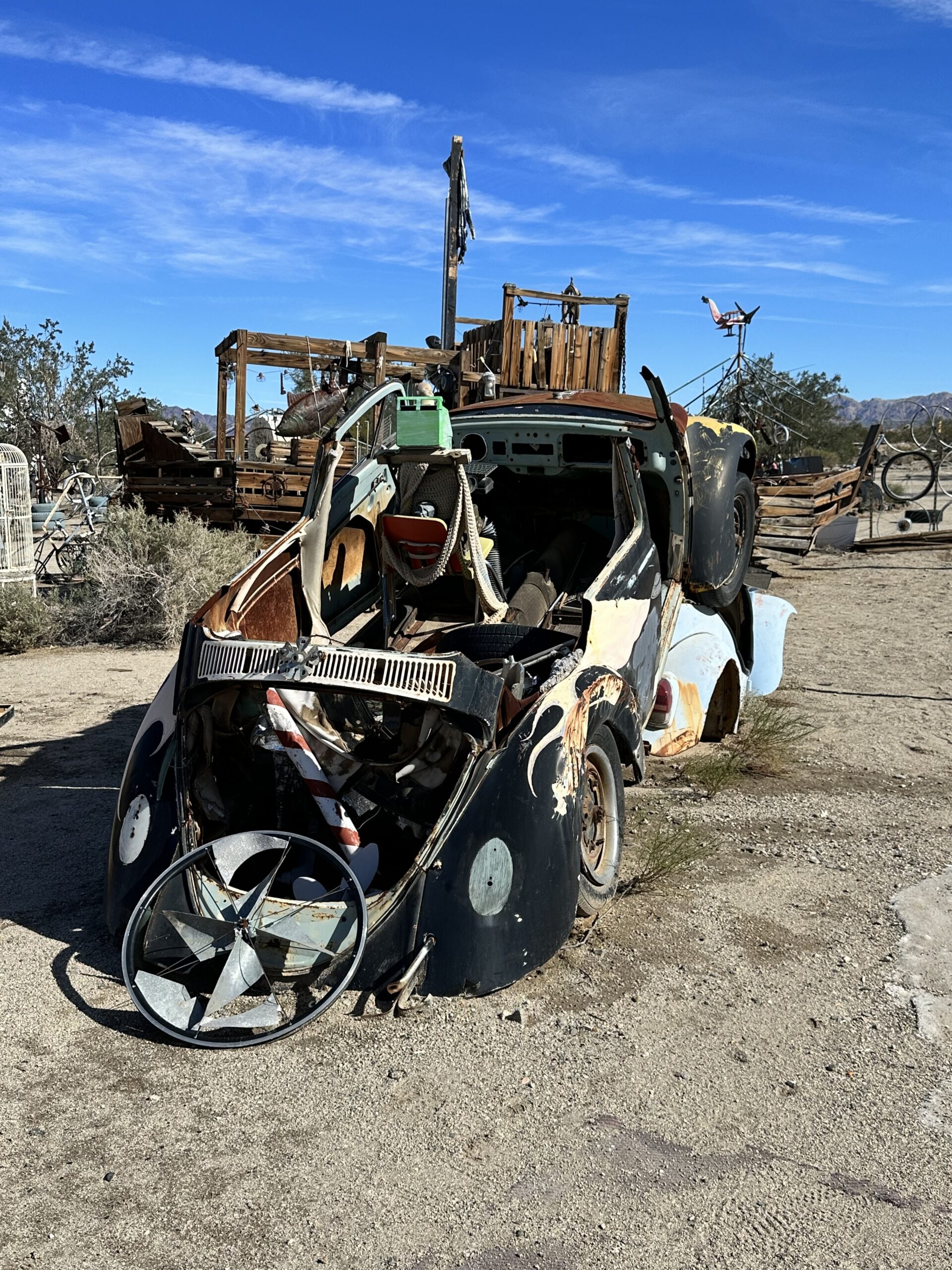
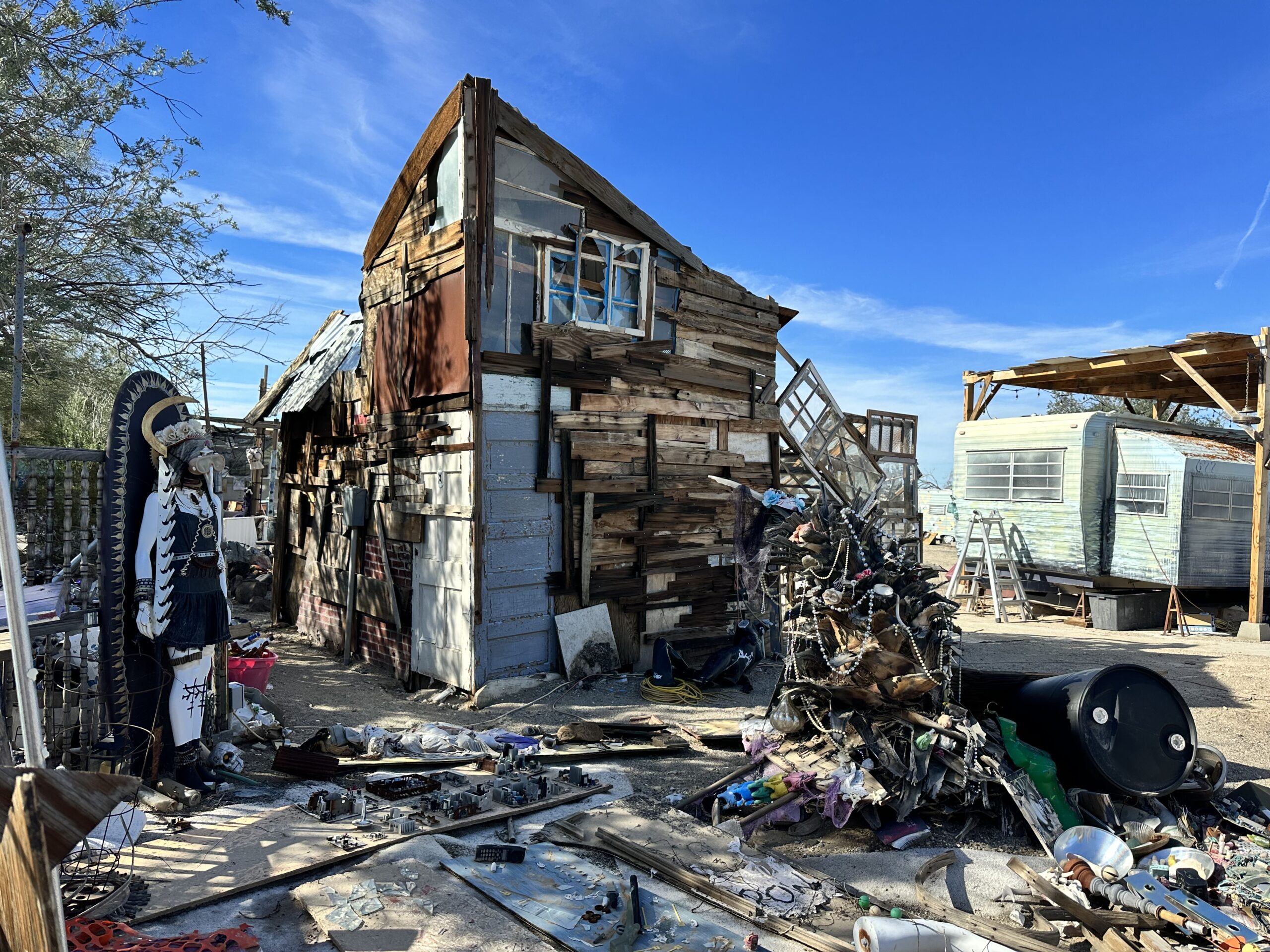
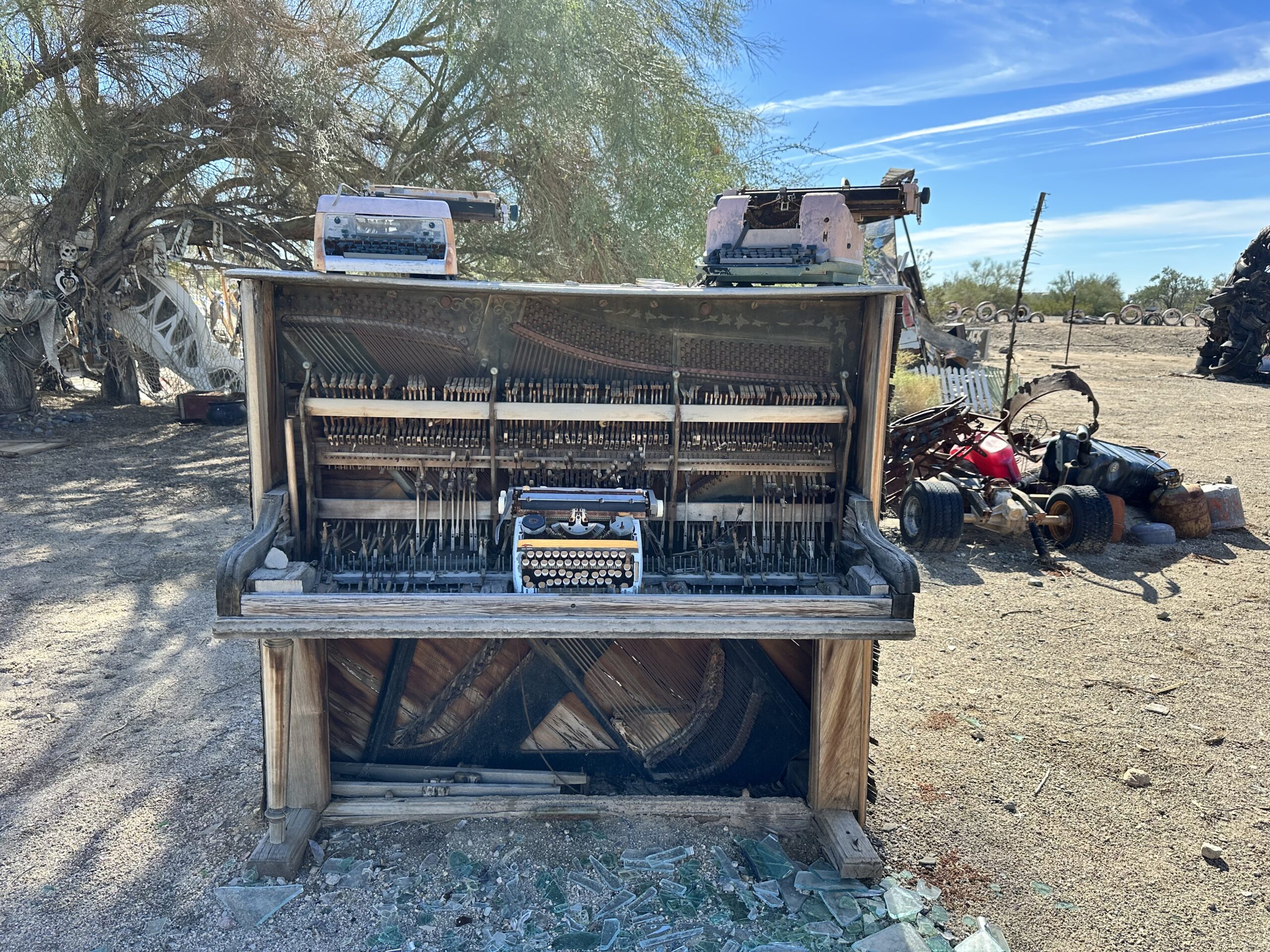
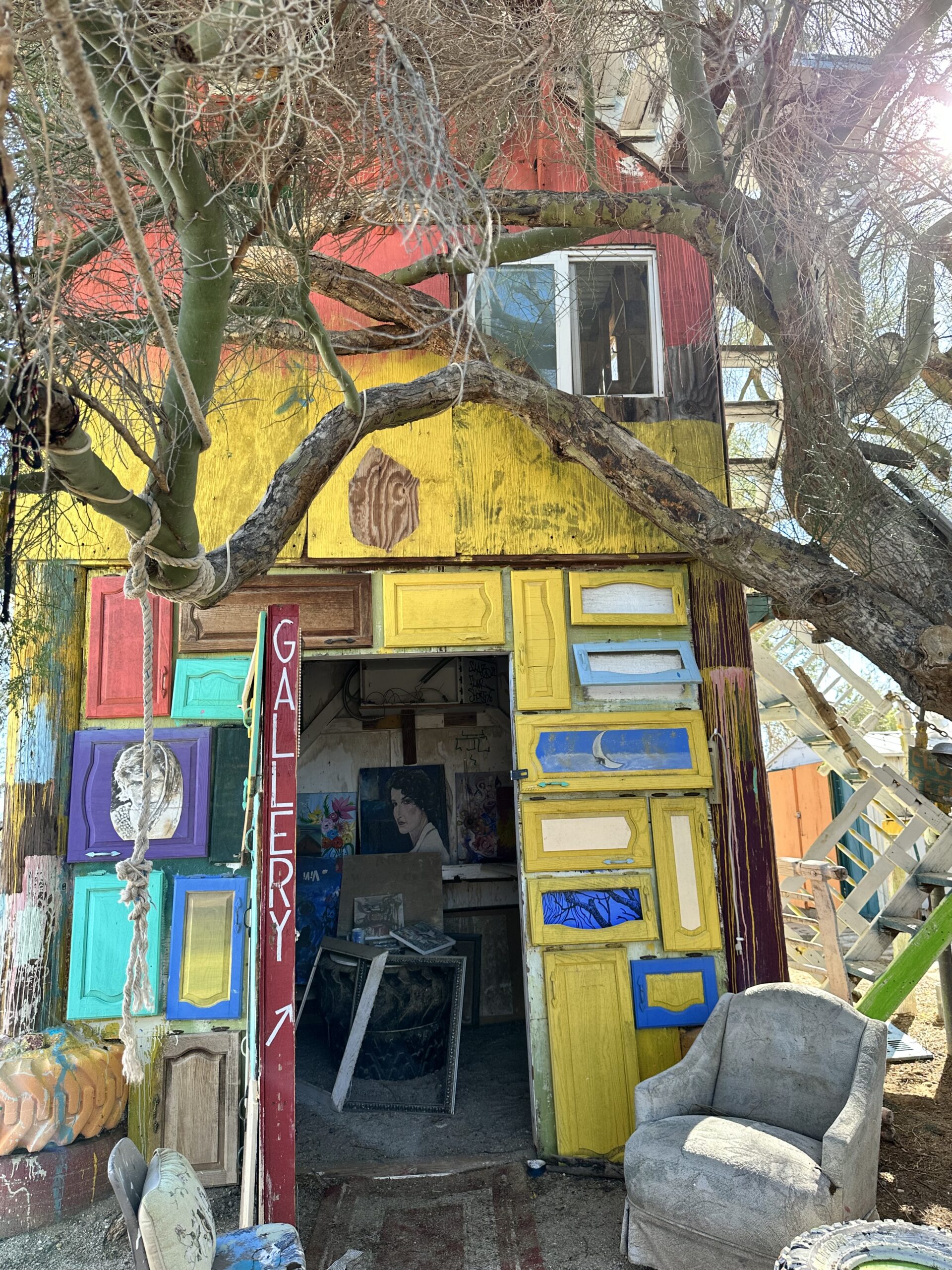
Slab City is located on the site of the former Camp Dunlap, A U/S. Marine Corps base used during World War II. After the camp was dismantled in the 1950’s, it wasn’t long before squatters began to occupy the area by using the leftover concrete slabs that once supported the military buildings to build makeshift homes and structures. Over time, the settlement grew into what is now called Slab City. While many embrace Slab City as a place of total freedom, the reality is more complicated. The community is largely self-regulated, with little formal oversight. However within this freedom residents must contend with the harsh realities of life on the desert. Emergency services are extremely limited.
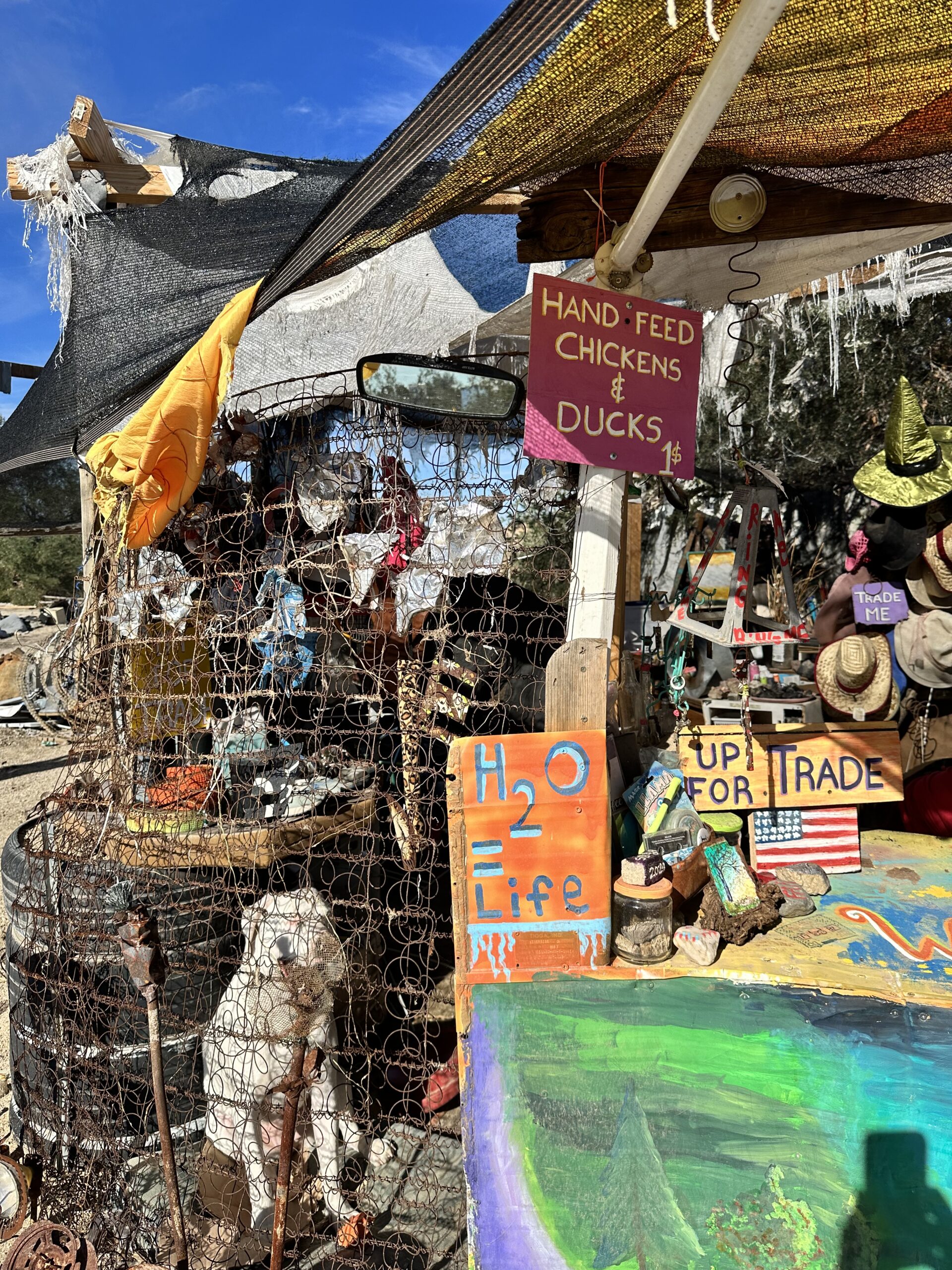
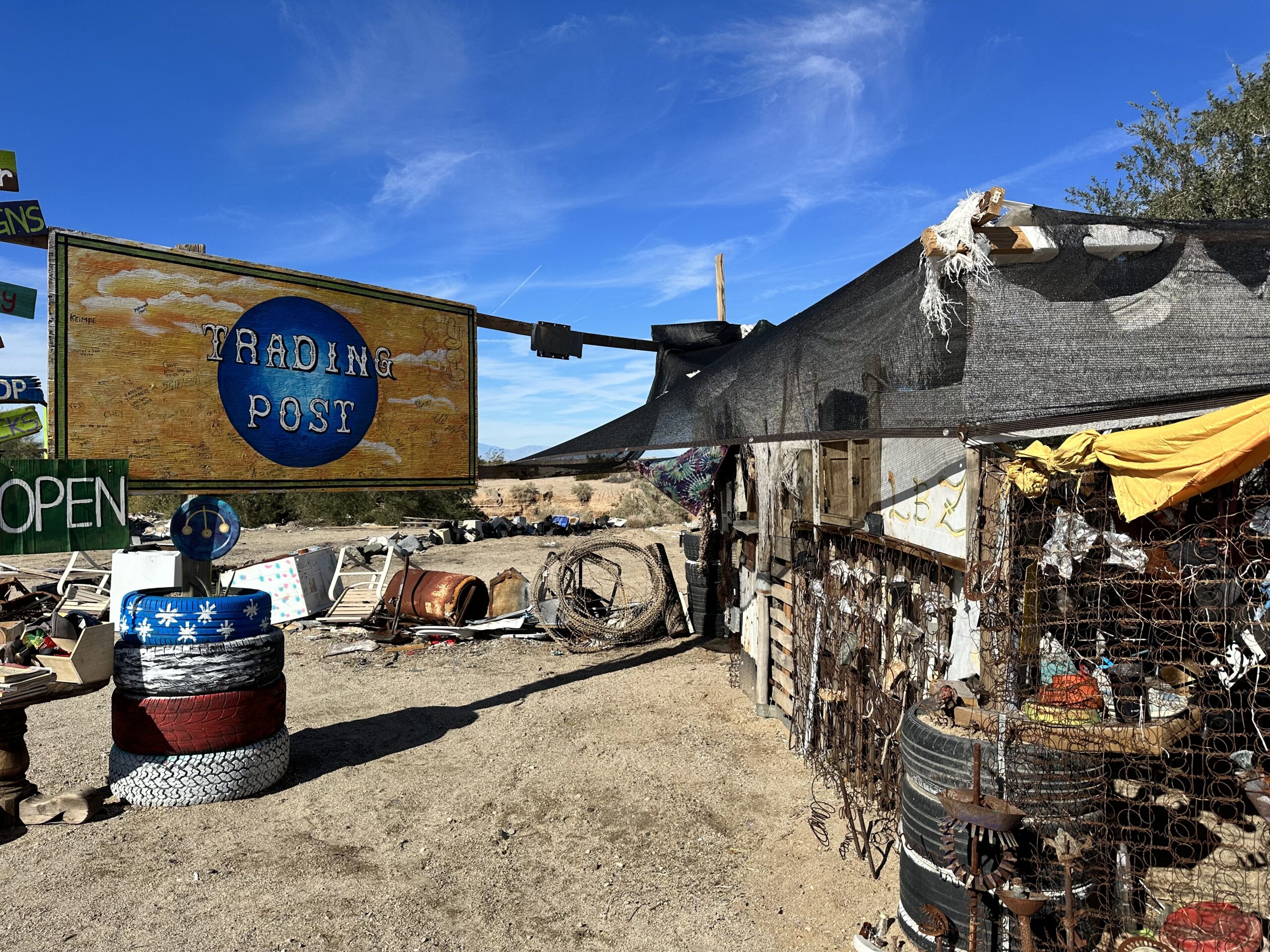
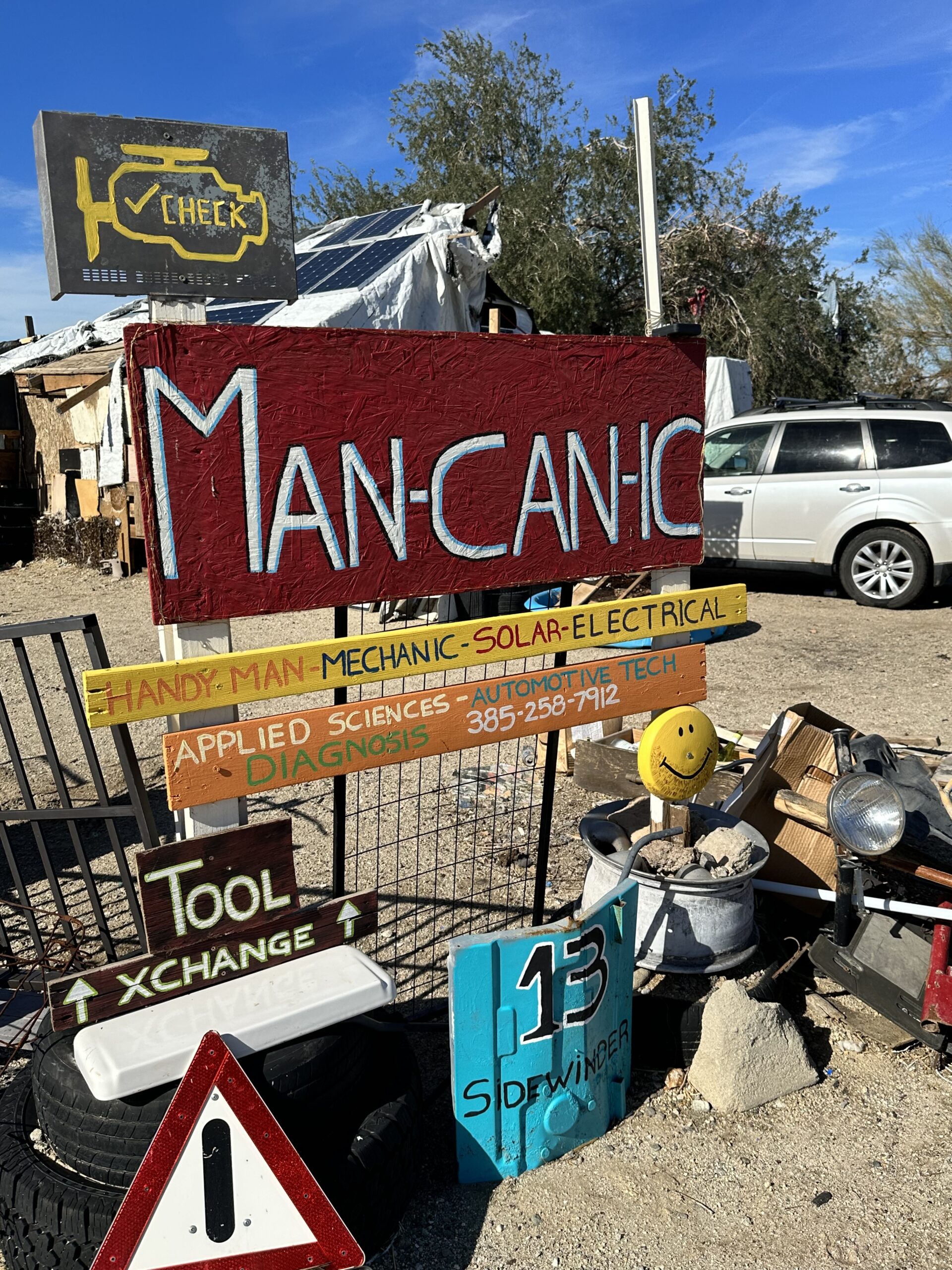
The biggest draw of Slab City is its complete lack of organized modern infrastructure. There is no running water, electricity, sewage or trash collection. The basic services most of us take for granted do not exist here. However, for many residents, this is historic, not a flaw. It is the lack of interest in interacting with traditional society that draws them here. Some residents generate their own electricity with solar panels or wind turbines, while others rely on makeshift solutions for water and waste management. Although it can be a harsh and unforgiving environment, the common ideology residents have of independence, self reliance, lack of competition and where possible mutual support is what makes it work. Many residents survive through barter or by accepting government aid. The extreme heat in the summer and the isolation with limited emergency services makes it difficult to live year-round, with only about 150 people calling it home during the hotter months.
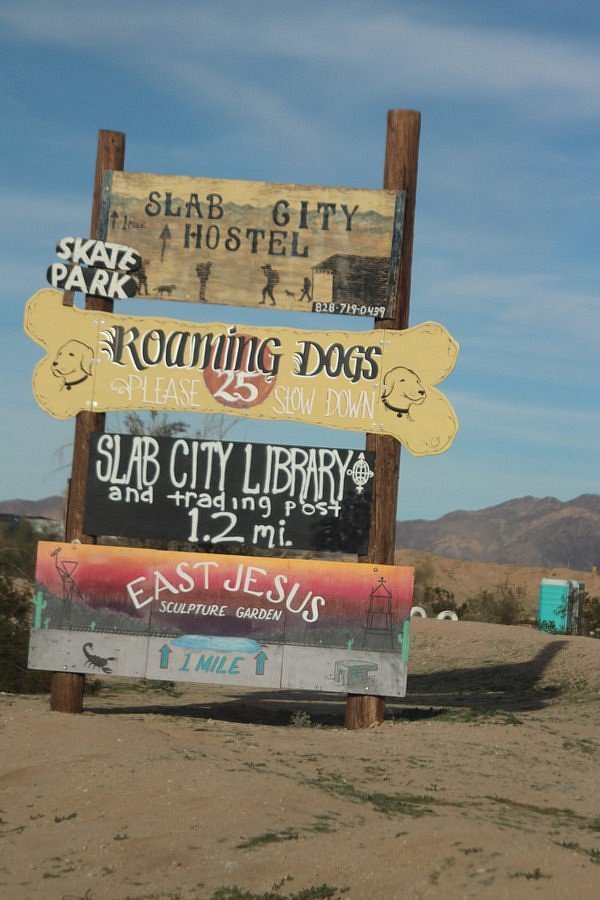
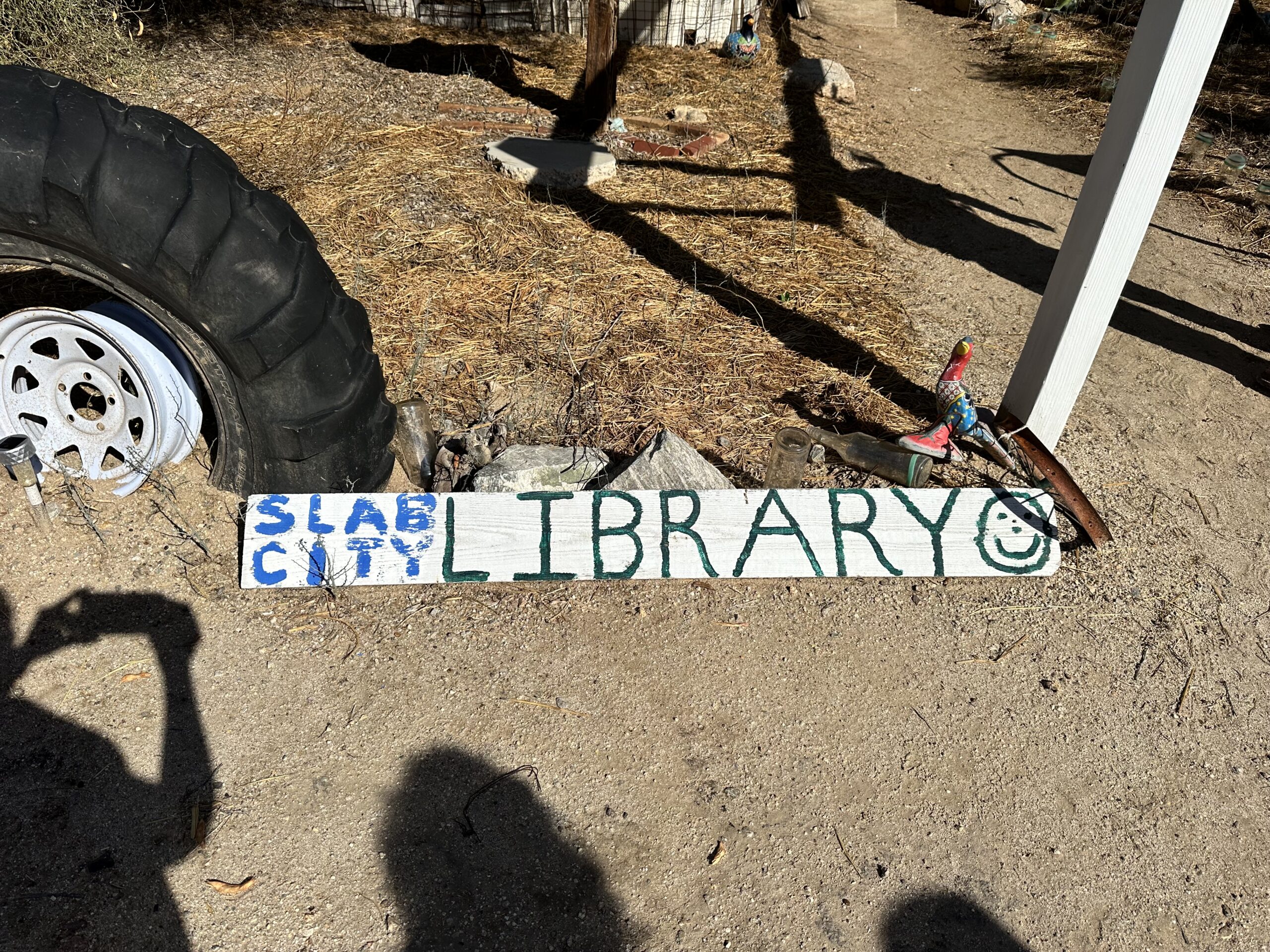
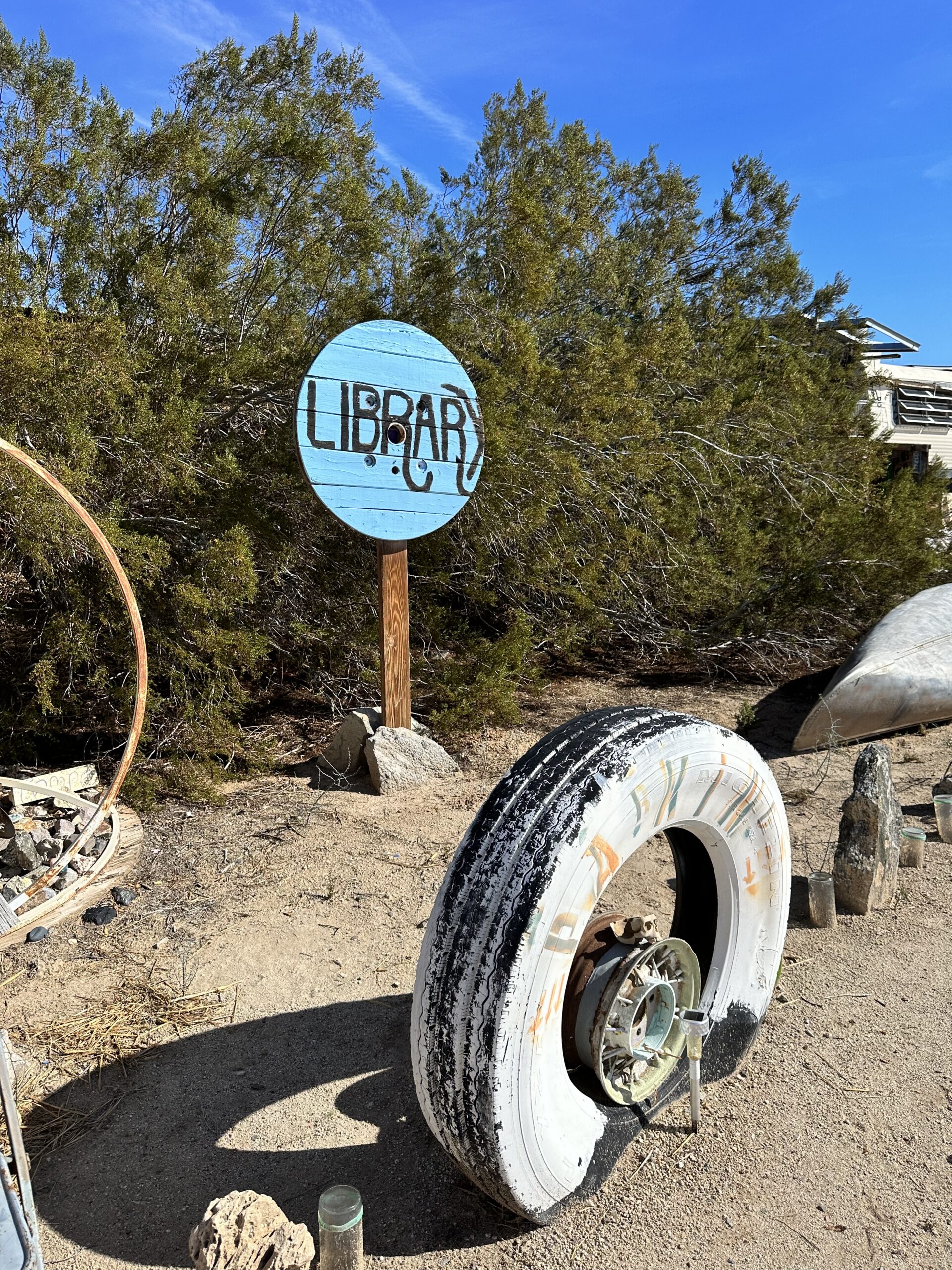
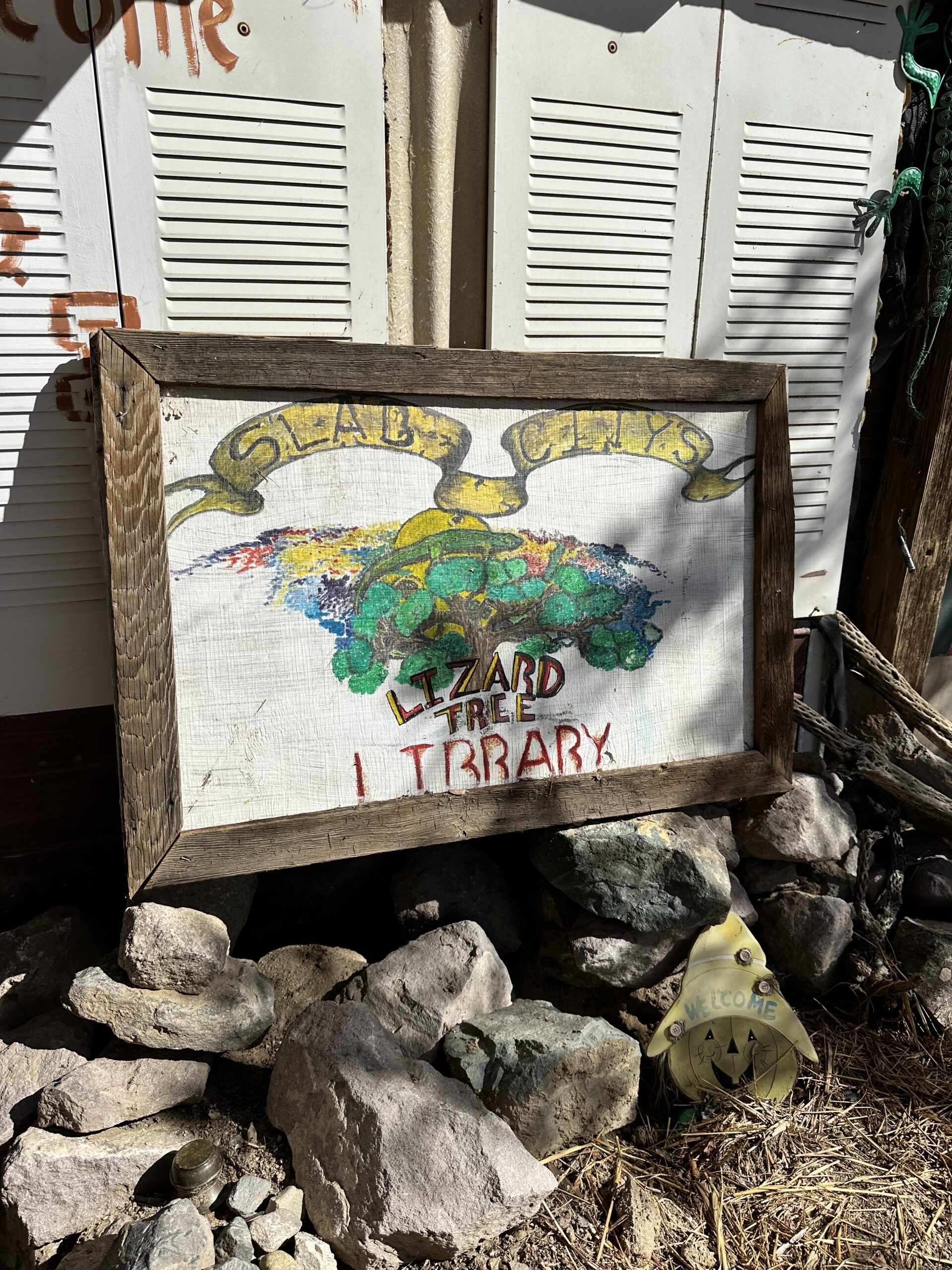
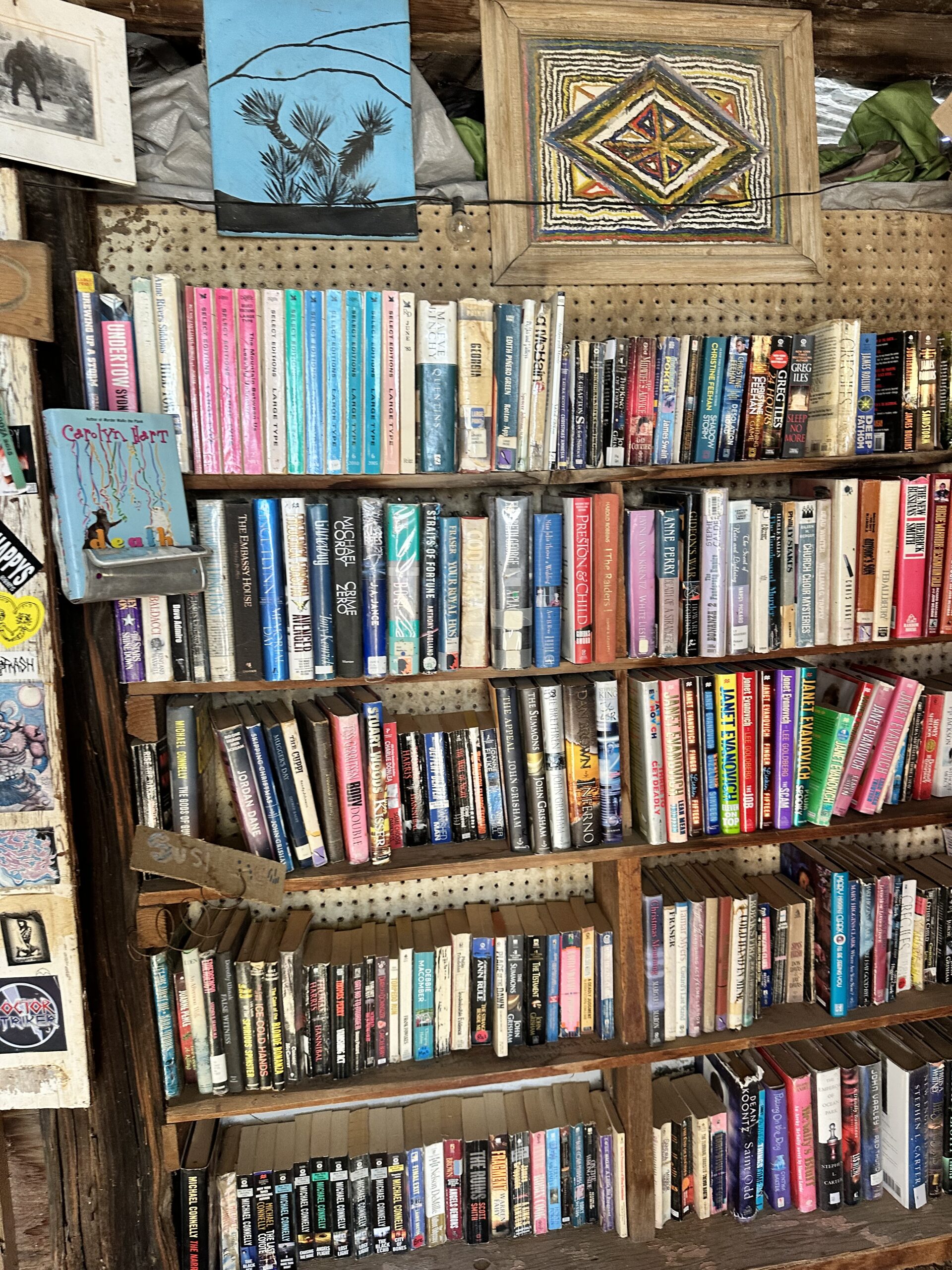
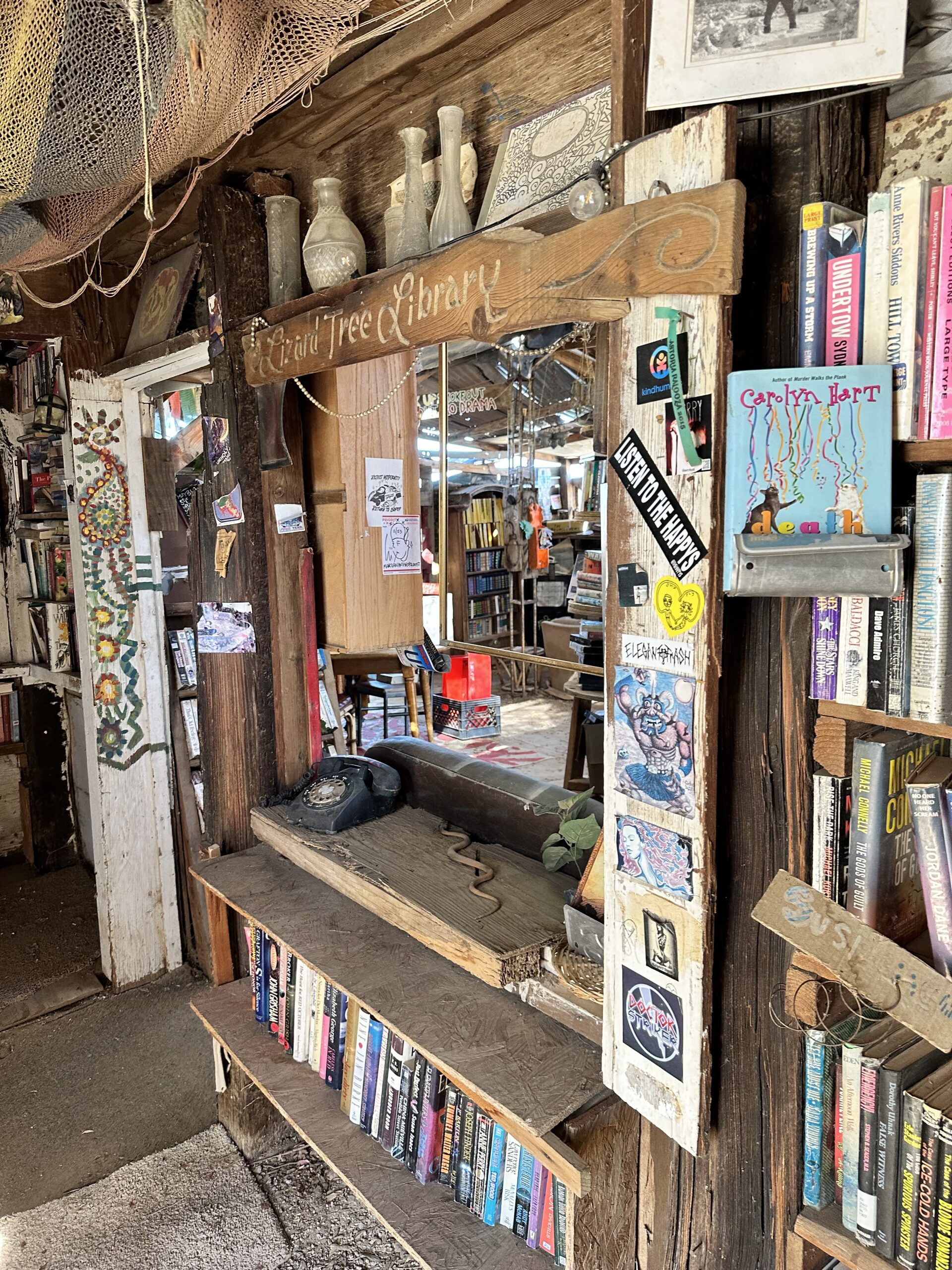
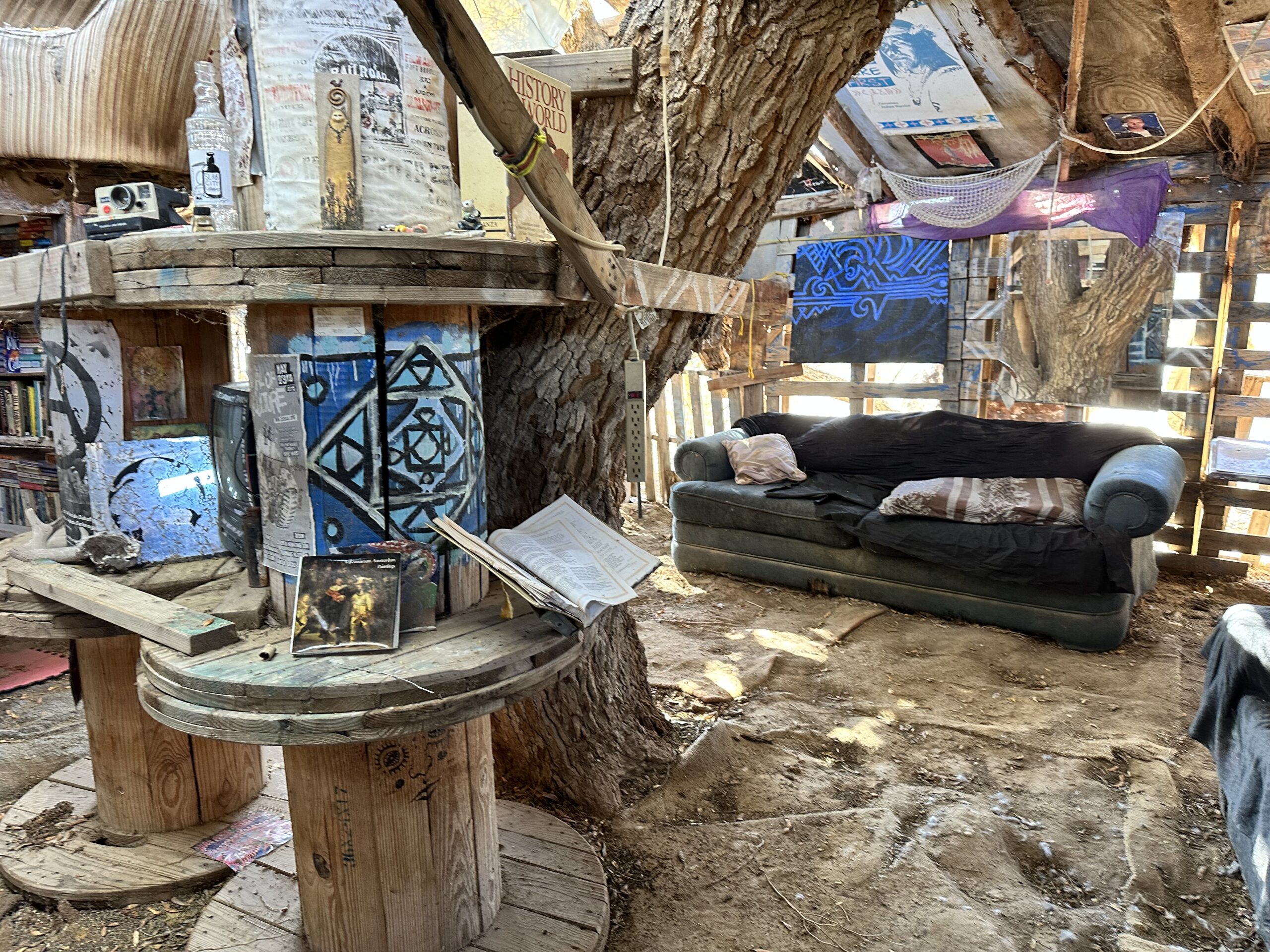
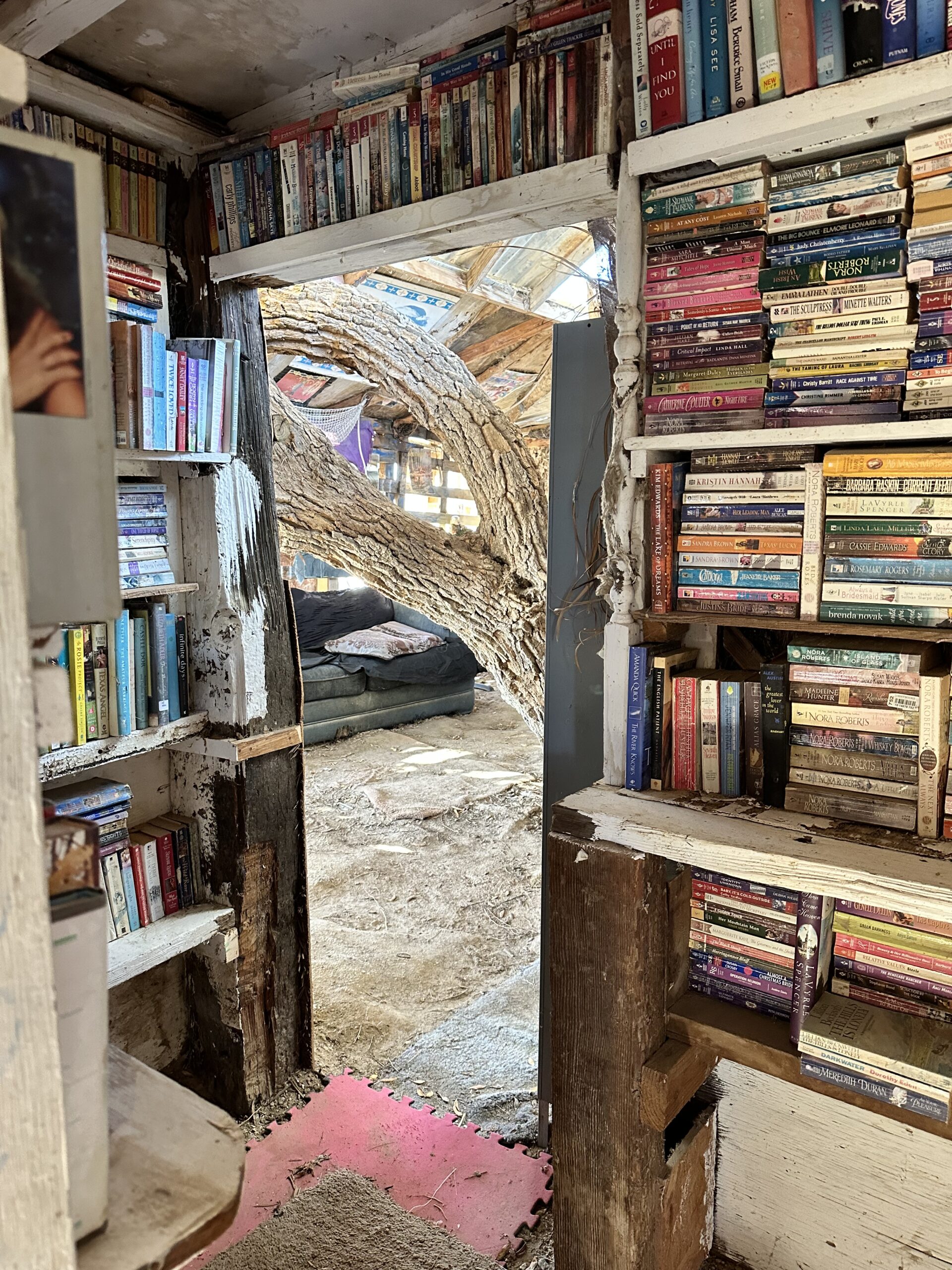
Children in Slab City primarily receive their education through nearby public school districts, with school buses from adjacent communities picking up the few children living there. Some residents also opt for homeschooling or independent study methods given their ‘off the grid’ chosen lifestyle. One of the most fascinating buildings in the city was their library. We were shocked at how many books were there. Older ones and some very current ones. Mainly, all received through donations from residents and the majority from visitors. We met their self-appointed librarian who wanted to bring organization to the library and has worked tirelessly to achieve that. He toured us around and we were blown away at the cataloging and ease of finding the thousands of resources. Clearly if one had the interest and capability of educating their children this was the place to do it.
What an amazing day and view of the world through others’ eyes. We marvel at what we are seeing and learning in our travels!